I’m writing this post in that sometimes-quiet space between Christmas Day and New Year’s Eve, when the presents have been unwrapped, too much food already consumed, and the idea of one more social engagement might put me right over the edge. I’m still listening to soft holiday music – Celtic instrumental holiday music to be specific – while trying to curb my love of cookies because my body is beginning to rebel. And I just want to stay home for a bit.
There was a post by a friend on Facebook a couple of days ago that asked how many of us wished we did not have to play by our normal rules of engagement – whether it’s a job or family/social events that require our presence – and could just rest in the winter. Even in the midst of holiday cheer, that question lingered in me. I love the holidays, love hosting people and cooking and wrapping gifts and lighting candles and raising a glass. But rest – I find myself wishing for it more than in years past. That may be because I’m older or it may have more to do with the state of the world being the most exhausting it’s ever been. I would love to stay home for New Year’s Eve, but Mick’s band has a gig and that’s where I’ll be. And I do enjoy hearing Mick’s saxophone play the notes of Auld Lang Syne at midnight.
Going into 2026, though, brings me back to the question of rest in the winter. It nudges me to think, once again, about what I want in my life moving forward. A better balance of quiet alongside other activities I love might top the list. Quiet is what allows me to be creative, read, rest, see what’s in front of me. It allows me to notice what’s going on with the people around me instead of rushing past them. It opens the space for better connection.
This past year was more challenging and battered us all more than any of us imagined, and that’s even after acknowledging that it was going to be a beast of a year. If it did us any favors at all, one favor might be that it clarified what we can stand up for as well as stand up to. It begged us to see things as they are and respond accordingly. Responding requires a well-rested body. And that requires quiet.
I’ve always loved the quiet of winter. This winter, I’m burrowing into it with a fuzzy blanket, tea, books, and the last of the holiday lights glowing in the background.
My sister Trish – an artist and photographer based in Colorado – just sent us a 2026 calendar with one of her photos for each month. As I flipped through the calendar, I recognized places in Italy that we’ve both visited, as well the kinds of western landscapes that I saw a lot of when I was a kid on road trips with my parents. I thought about my old 35mm Canon, how I used to wait for the prints to be done after a trip somewhere. I didn’t shoot pictures of everything that caught my eye back then; I was choosy because film was expensive. Getting more than one print was also expensive; pictures were shared sparingly.
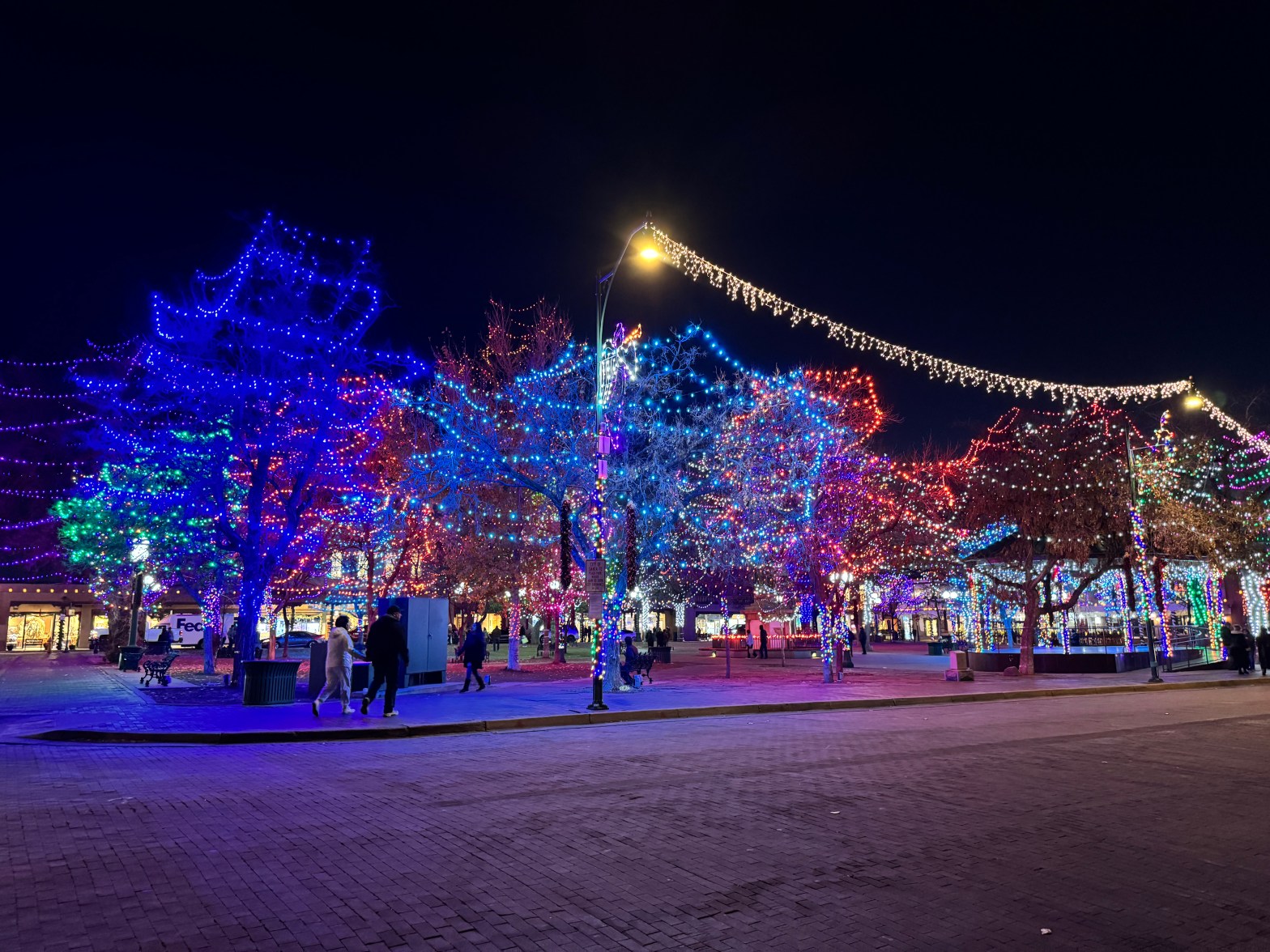
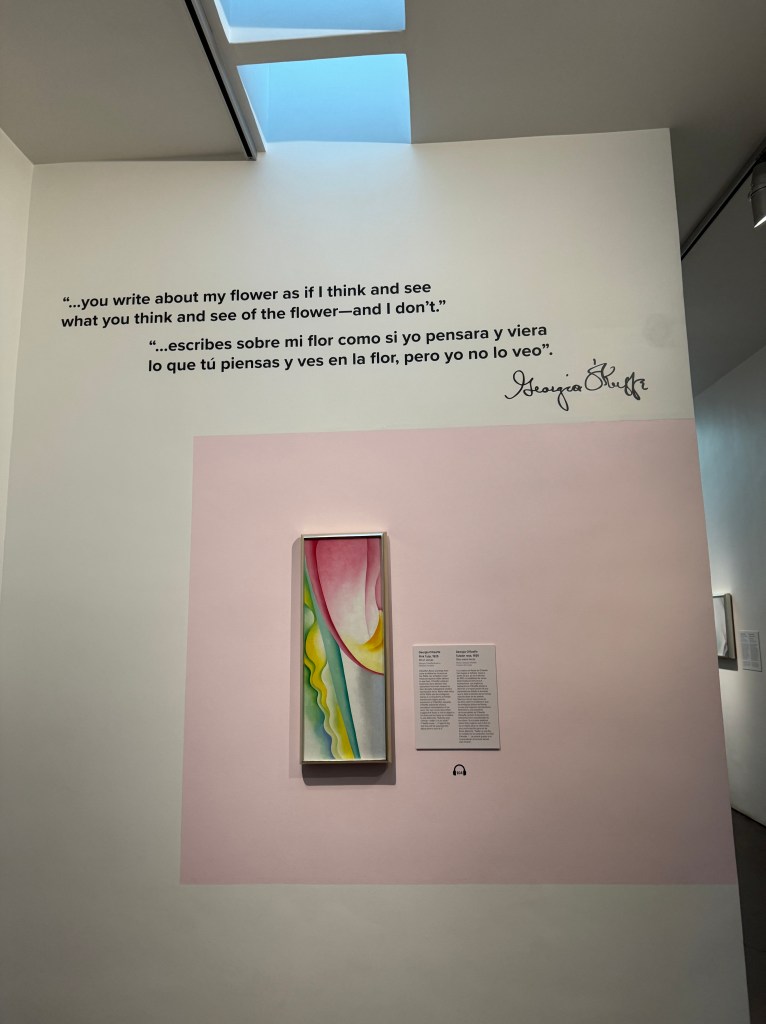
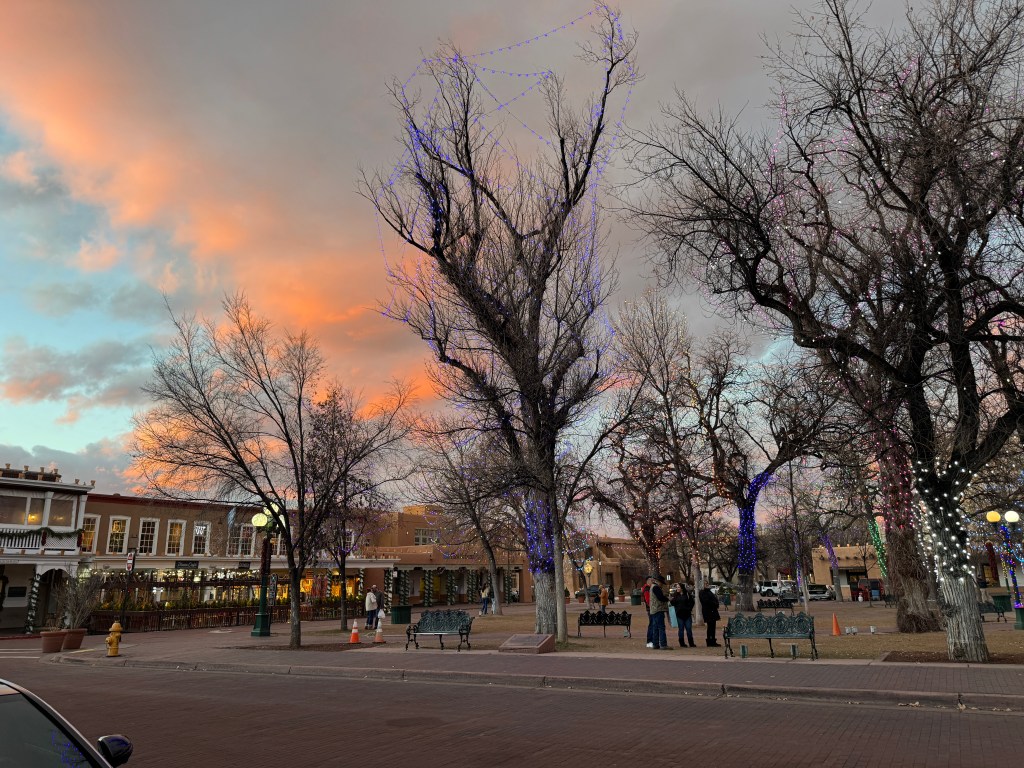
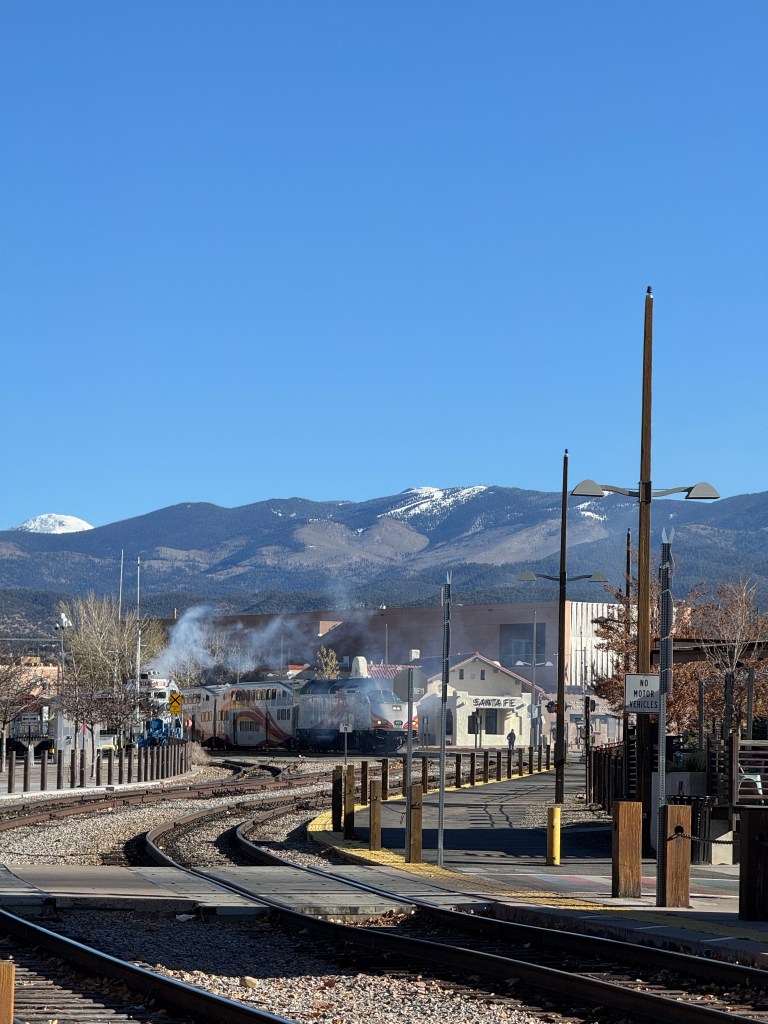
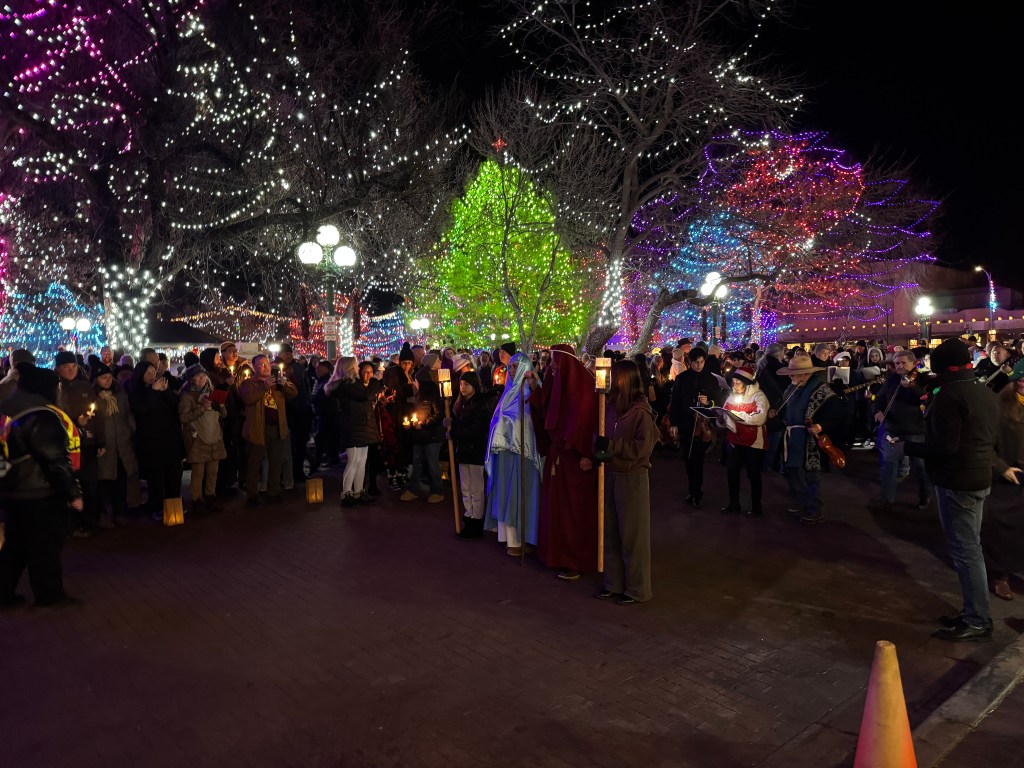
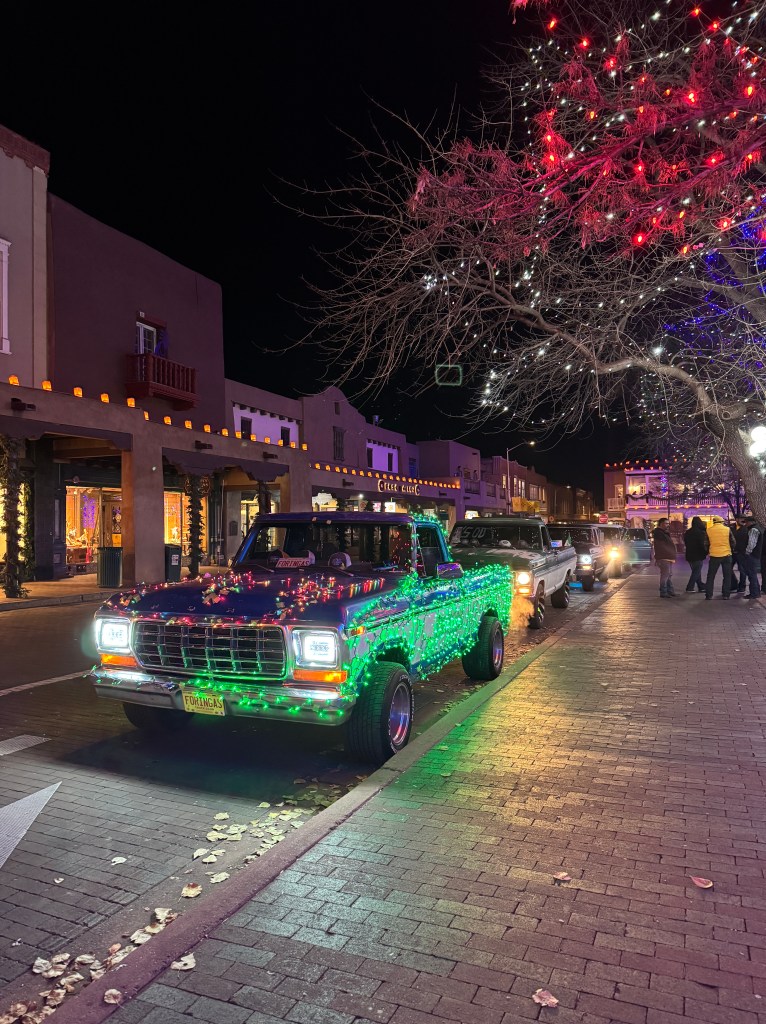
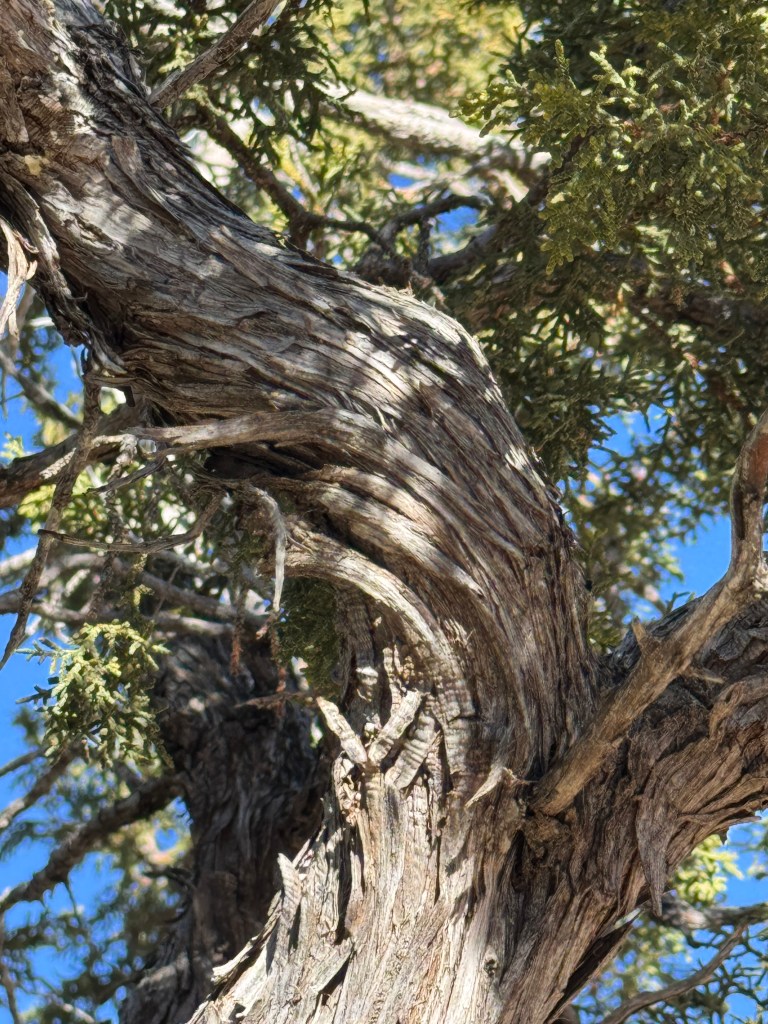
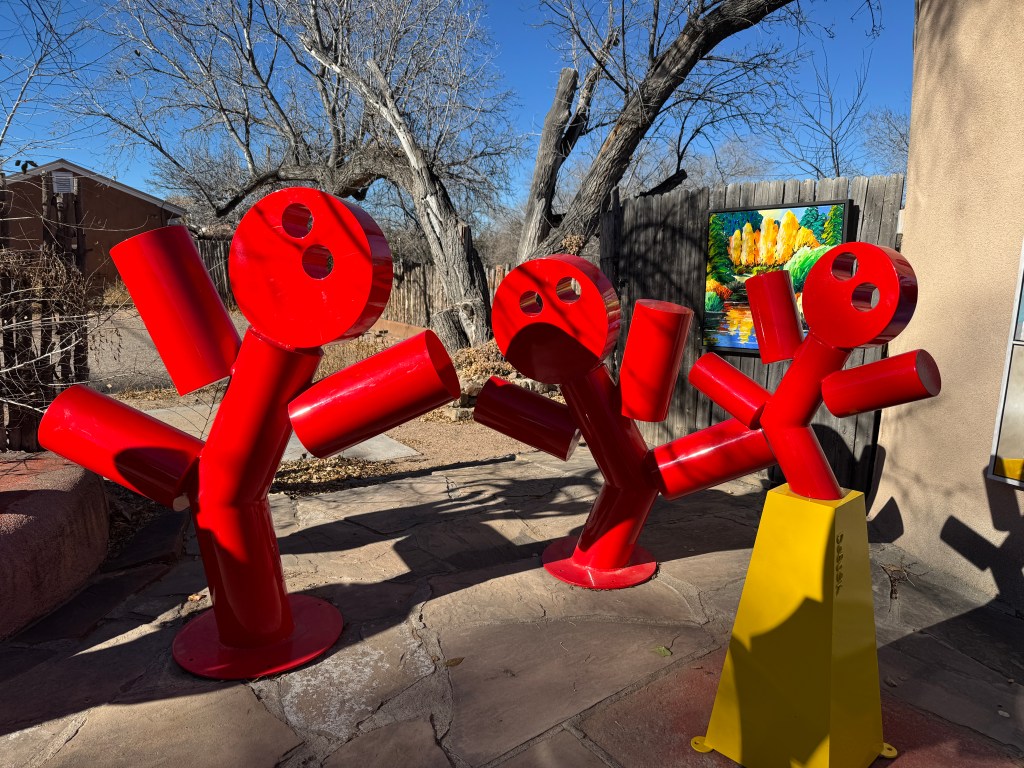
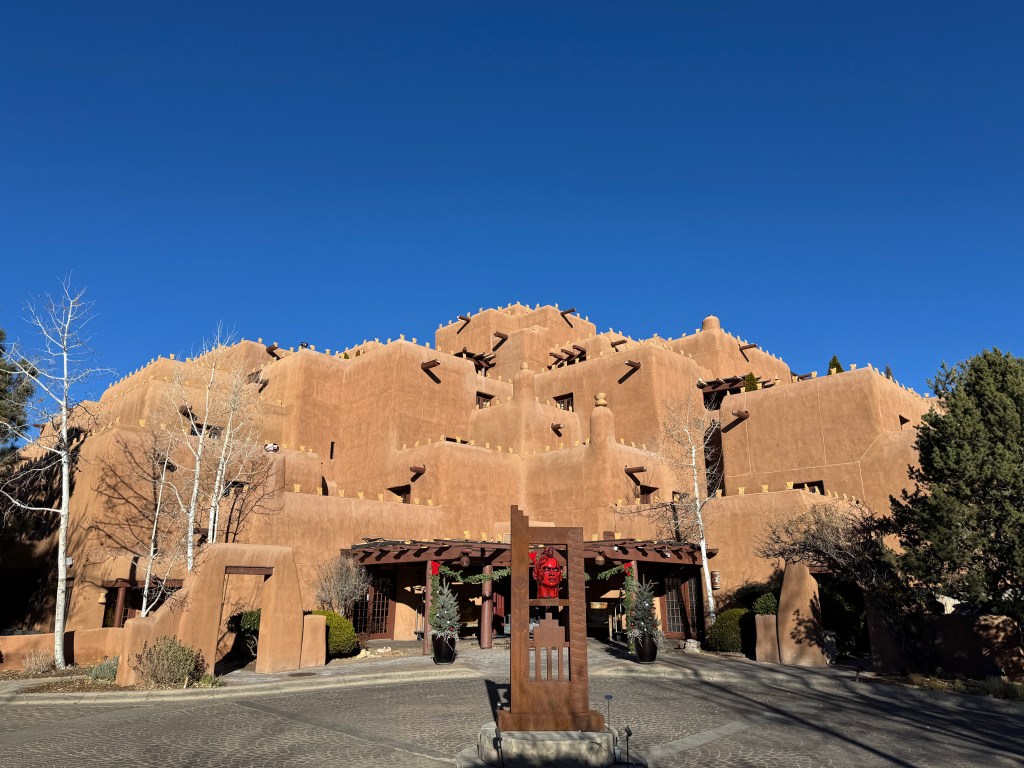
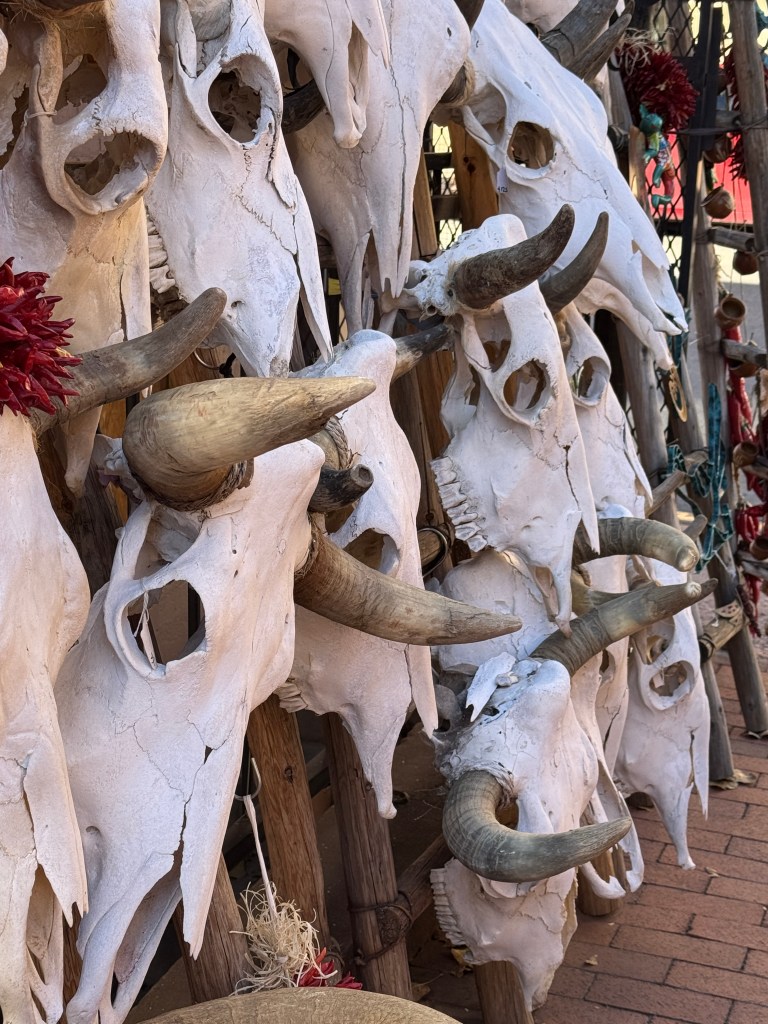
Earlier this month, I went on a trip to Santa Fe with my partner Mick and our friends Mark and Mary. We spent a long weekend meandering around the city, visiting museums and trails and restaurants and tap rooms. We ducked in and out of shops and enjoyed a las posadas procession around the old plaza in Santa Fe. I posted nothing on social media while we were there, choosing to wait until I got home to look through the many photos I shot with my iPhone. And, of those, I didn’t post a lot. I was choosy. That felt right.
Here is our trip, distilled to nine photos:
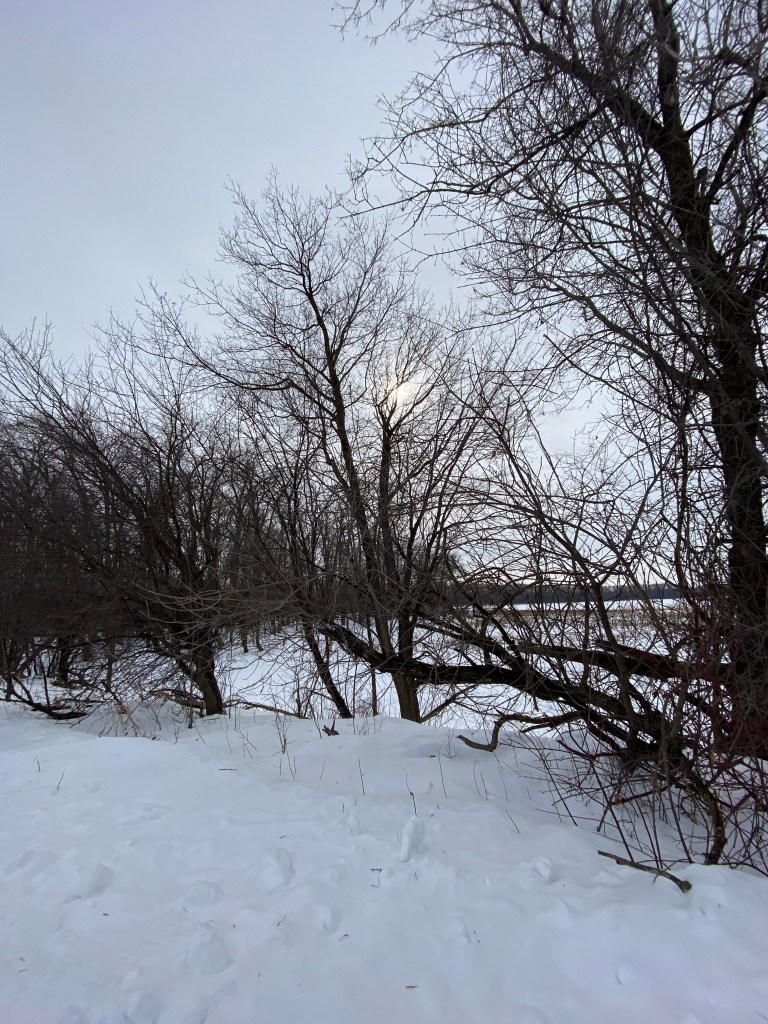
Once we got home, in the middle of a Minnesota snowstorm no less, it hit me right between the eyes that Christmas was two weeks away. I hadn’t bought into the frenzy of it all just yet. Nor did I have time to ponder that as we moved right from unpacking to appointments, childcare for our granddaughter, a collective art show that included work by our son, menu-planning for the holiday dinners we’re hosting, and more. Evenings are when you’ll find both of us collapsed on a couch right now, Finn the Wheaten curled up next to us.
Which leads me right back to that calendar I began this post with. Sometimes photos, when not overshared but carefully curated, remind me to curate my life and what I spend my time on whether that’s creating art or traveling or volunteering or speaking out. To crop out what isn’t necessary (frenzy, overbooked days, too much time spent scrolling, overpacked suitcases, more than one newscast per day, complaining). I’m not quite ready to think about 2026 just yet – 2025 has been stressful enough. But I can see where I might be headed – to a year in which I’m choosy about more than just photos.
Have you ever noticed how a carefully curated photo or art exhibit leaves breathing space? And that space allows each piece to be considered, reacted to, understood. That. That’s what I’m after.
Happy holidays to all. Leave yourself some space to consider, react, understand.
Today’s return to One Minnesota Crone’s Conversation with a Poet series celebrates the newly released poetry collection Astronomy Lessons by Constance Brewer (Gyroscope Press, $14.99 paperback).
Constance Brewer and I have some good history. We met in 2009 as volunteer editors at Every Day Poets, a poetry website that published a new poem each day. When that site went on hiatus in 2014, Constance and I joined forces and co-founded the quarterly poetry journal Gyroscope Review. We had a great time putting the journal together, coming up with new things for National Poetry Month, and spawning the now-annual Crone Issue that specifically celebrates woman-identifying poets over the age of 50. When I left Gyroscope Review in 2020 to focus more on my own work, Constance kept nudging me to submit something to her then-new effort, Gyroscope Press, and she eventually published my chapbook, How We Learned to Shut Our Own Mouths, in 2021. Constance and I kept exchanging our work, collaborating on the 2023 poetry collection Prayer Gardening (Kelsay Books, $20 paperback).
As soon as I learned of the release of Astronomy Lessons, I knew I wanted to include a conversation with Constance here.
Astronomy Lessons uses physics and mythology to delve into the many relationships that define us. It’s four sections – Scientific Method, Linear Dimensions, Orbital Decay, and Celestial Spheres – examine love, family, loss, aging, and more that makes us human. Constance uses the stars, planets, moons, myths about the night sky, and our own planet Earth to illustrate that which swirls within us, makes our emotions rise and fall. Her work expands our tiny hearts to include the cosmos and then brings us back to ourselves.
The first in the collection, Last Thoughts Before Drinking from the River Lethe, demonstrates this perfectly. It’s an apt invitation to what lies ahead.
Last Thoughts Before Drinking from the River Lethe

All day long you think of the underworld—
the gloom, the depth, the stink of sulfur.

It's the dimness that bothers you, the lack
of a view of the heavens. Instead of oceans of fish

there are rivers of souls, undulating in unison,
a great whale of movement that lulls you

into complacency. You think how it would be
trapped beneath the surface, slick with the vapors

of the final exhalations, air rift with final words
caught unspoken. Of the hundreds of billions

of souls you concentrate on a mere handful,
those that glow with extra light, as if incredibly

close in the night sky. The ones like summer fireflies.
You know as soon as you step in the flowing river

of oblivion you’ll cease to care about the universe,
the sun, and the home you left behind. You promise

yourself you won't forget what it's like—to choose
radiance as your form of conclusion.
OMC: Constance, welcome! Thank you for being here and congratulations on the release of Astronomy Lessons. How long did you work on this collection? What was the poem that sparked the realization that astronomy and mythology were the right blend of science and story for this book?
CB: This collection has been a long time coming. I’ve been working on it for years, and it started pulling together when I realized in all the poems I write, several were constantly about space, the universe, science, or some form of mythology. It’s always there, in the back of my mind, especially when standing outside in the cold looking up at the stars.
My poem “The Greater She-Bear” sparked the basis for the collection, it’s an amalgam of all my fascinations in one place.
OMC: After years of working with you, I am in no way surprised that science – physics, in particular – has such a large presence in your work. Did anything about these poems surprise you? Catch you off-guard?
CB: It always takes me off guard when I realize at the heart of my poems it’s always about relationships. My relationship with nature, space, science, of course, but also my relationships with family, my partner, the animals in my life.
I’ve always had an interest in science, but high school repeatedly told me I was no good at math, so science was something I shouldn’t aspire to. That’s kind of the way it was back then. They said, so, I believed. Then I went to college and had to take a science elective. I nervously chose Astronomy. To my surprise and delight, I liked the class, and found I had no problem calculating light years. I took my newfound science interest into Intro Physics, and loved it, although the math was harder. and trigonometry will never be any great love of mine. Then, I went on to the Army and they made me an Engineer. None of my buildings ever fell down, so take that high school math teachers.
OMC: Ha! That’s some good revenge, right there. And maybe some old teacher of yours would say that was the plan all along – to push you to find out for yourself what you can accomplish despite being told you can’t. And now, back to the poetry – were science and mythology always your territory, or was there some other path that led you to it? What other areas do you consider your territory as a writer?
CB: Mythology figured more prominently in my writing in my early years, and yes, I have a Persephone poem, I think everyone who likes mythology has a Persephone poem. There’s something about the story of love, loss, and relationships that calls to us. In my younger days I read a lot of mythology, mostly Greek, but also Roman, Norse, Hindu, and Native American. The gods and their antics always intrigued me. Here were these great figures the mortals were supposed to worship, and most of them were no better than us ordinary peasants. It brought them down to a level I could comprehend, and it seeped into my writing in my quest to make religion understandable to me. Religion became mythology with some guardrails.
I don’t consider myself as having territories, as much as having areas of interest that won’t go away. I return to the science/relationship well over and over again to find something new in something familiar. It’s my way of taking the puzzle pieces of life and slotting them together.
OMC: “Areas of interest that won’t go away.” Nice way to put it. It does sound more approachable than “territories.” And I think we all write to make sense of things, to make them understandable to ourselves, on some level, right?
Astronomy Lessons digs into a lot of family relationships – partners, parents, others – what was most difficult to put into a poem? Did you let anyone in your family read these before publication?
CB: It’s difficult to look back at parents, and family relationships with people who are gone from this world.I’m telling my side of the story, and it’s hard to put myself in the shoes of the others. I think untangling the relationships of the past is a form of therapy, and watching my poems tackle some of the tougher issues is hard, but necessary for growth. Although some days I don’t feel like growing and just let it all out. Then I put those poems aside for a week, a month, a year, and come back to them to see if my feelings have changed or intensified. Sometimes I put the poem away for good, having said what I need to say, but consider the topic still open for more poetic exploration.
Sometimes my partner reads the poems, especially when I want an outside perspective that still understands me. His insights are invaluable. I’ve never sent my poems to my brother to read, he’s not a poetry person, and from visits, I know we don’t remember things the same way, especially about relatives. He’s more forgiving than I am.
OMC: That’s interesting that your brother doesn’t read your work. I have that situation, too – I wouldn’t send anything to any of my siblings for feedback because our memories of family situations are so different. It goes to who we are, who we’ve become, how our experiences beyond our childhoods have informed our own stories. My most useful feedback comes from friends like you who are usually not invested in the story I’m telling the way a sibling or other family member might be.
What is your hope regarding what readers will take from Astronomy Lessons? Have you had any feedback that has surprised you?
CB: I hope readers will share my interest in science and mythology and let their minds wander to the stars. The takeaway I hope readers come to is that all things are interrelated, we can’t separate ourselves from relationships with other people, or the world around and above us.
I had one person tell me they didn’t expect to find humor in any poems, considering science isn’t known for its humor, nor is mythology. Although I find the gods pretty entertaining. My poem “Synthesis” came from a prompt in one of Diane Lockward’s newsletters and was published in her Crafty Poet II: A Portable Workshop book. Writing it, I felt over the top that day and the poem reflects that. My humor can be a bit warped. I’m glad someone out there appreciates that I can’t be serious all the time.
OMC: I love that message about all things being interrelated. Yes! And I love it when your poems are funny. Since I’m married to a scientist, the whole idea that science doesn’t have much humor has been completely debunked.
Do you have a favorite poem of your own from Astronomy Lessons?
CB: I actually have two favorites, the first is “The Problem with String Theory”, which is the oldest of the poems in the book and touches on my fascination with physics. The second is “Morning, Before the World Wakes Up”. It is a newer poem and combines my love of the night sky with my interest in relationships. It’s probably where I started to explore more of the relationship poems and branched out into less science, more people poems, the bulk of which will be in an upcoming collection.
The Problem with String Theory

The opening move involves the transfer
of wrapped string from one player to another,
fingers and thumb weaving diamonds between
empty spaces. It's a game as old as mankind,
and elegantly explains the whole lot—all known
natural forces, what the world is made of down
to the subatomic composition of the universe.

It's in the passage of filament from one person
to another where theory goes astray.
In the rush to take possession of the loop,
gravity falls out the holes and rolls away,
leaving us unable to explain the one thing
that would help us explain everything.

In the end, it doesn't matter, because it won't be
mathematical precision that pushes theoretical
physics out of the nest, but a length of cord
oscillating back and forth from player to player,
starting at Opening A, cat's cradle,
continuing onward in infinite combination.


Morning, Before the World Wakes Up

The dark before morning gets longer,
and we stop on our walk to the truck
to admire the planets and stars, enjoying
this slice of solitude before dawn darts
over the horizon. Is that big, bright

planet Jupiter or Saturn? Mars twinkles
red, Venus blinks shyly in the east. The
moon is a waxing crescent slice of
cantaloupe, ready to retire for the night.
Even at 5:30 in the morning, the world

is not ours. A few lights pop on in houses
along the street, a truck growls its way
to the stop sign on the corner. A calico
cat slinks home after a night of hunting
little nocturnal creatures. On the eastern

horizon, a tiny swath of morning purple
over the hills. The coming chill of autumn
hangs in the air, and we finally jump into
the warmth of the truck, glad we stopped
and took the time to admire the stars,

tucking the memory away to revisit at
dinner, after we've consulted the Internet
to find out whether it was Jupiter or Saturn,
only to discover they share the early
morning sky, companions like you and I.
OMC: Thank you for sharing those. I especially like the morning poem. And the hint of an upcoming collection is tantalizing!
I also want to share the very last poem in the book here, because it wraps up this collection so well and I love how it brings everything full circle. It’s also one that shows your humor.
All My Love, Earth

I keep you grounded—get it?
I crack me up sometimes,
but do you even notice?
I’m here under your feet twenty-four/seven,
giving support, stabilizing your boots
and backs with my terra firma.
I’ll admit my naughty twin gravity
plays a part, albeit a circumstantial one.

I tire of being taken for granted—the way
the sun tugs the flowers to attention each morning
and warms the soil protecting my tender lands.
I underpin as you examine the starry firmament,
ignoring what’s right beneath you.

You try and escape, invent planes, even rockets,
but sooner or later you return, place bare feet
to my rocky spine, sigh with contentment.

You love me, I know you do.

Why can’t you admit we were made for each other?
You’re made up of me, I'm made up of you. Star stuff.
We share 96% of minerals—oxygen, silicon, calcium,
iron, sodium, potassium, magnesium, aluminum.

Consider this: 53% of you is water, 71% of me.
Humans, sadly, never get my drift.
It all comes down to this:

Earth to earth, ashes to ashes, dust to dust.
I welcome you home.
At what point in your process did you come up with this particular poem? Did you know right away it would be the bookend to the collection?
CB: I was reading a science book (again) and the famous quote by Carl Sagan “The cosmos is within us. We are made of star-stuff. We are a way for the universe to know itself”. really struck me. I had to look up the elements that are in the human body, and in stars. I was also reading about the earth, and the two meshed in my mind, how we look to the stars yet forget about the cool planet under our feet. It came down to the question, “What does the Earth think of us?”
I always felt it would be a good poem to end the collection, bringing us full circle from wondering about the cosmos to appreciating what is right here with us.
OMC: Nice. I’m impressed with the amount of reading you do that goes into the poems. It all feeds the work, doesn’t it?
What do you feel is the most important thing you contribute as a writer in this time in our history? What do you think might be missing from the current literary landscape? Big questions, I know.
CB: I hope I contribute poetry that is accessible and touches on things people want to think about, like relationships and the world around and above us. The current literary landscape is more open than it used to be, but I think there is always room for more voices, especially the older poets among us. The 50+ set still has a lot to say, and experiences we can learn from. I think poetry being accessible in other forums besides lit magazines and MFA programs would be a great idea. Pushing poetry out into the world so it can’t be ignored. Maybe we need t-shirts with our poems on them, or flyers we tack up on telephone poles. I see some innovative things being done, like the gumball machine poems. How wonderful!
OMC: Agreed! And there are those people who set up typewriters in public spaces and give people poems on the spot. That’s a fun way to get poetry out there, too.
Constance, thanks again for having a conversation with me about Astronomy Lessons, poetry, and the way you work as a writer. Before we go, what projects do you have on the horizon?
CB: Thanks for the opportunity, Kath. I have several upcoming projects, I am working on a new poetry book called The Family Rate, where I explore relationships with people in my life past and present. I’m sure some mentions of the cosmos will sneak in there. I also have a fantasy novel coming out early in the new year, The Demigod’s Daughter. Writing poetry and novels fills my need to write very short stories (poetry) and sprawling epics (novels). In between I work on editing Gyroscope Review and on my artwork. Got to keep busy, and no matter what anyone says, ADHD is a superpower.
OMC: I’ll look forward to your next big thing!
Below, I’ve listed where readers can get a copy of Astronomy Lessons, as well as links to Constance’s other work.
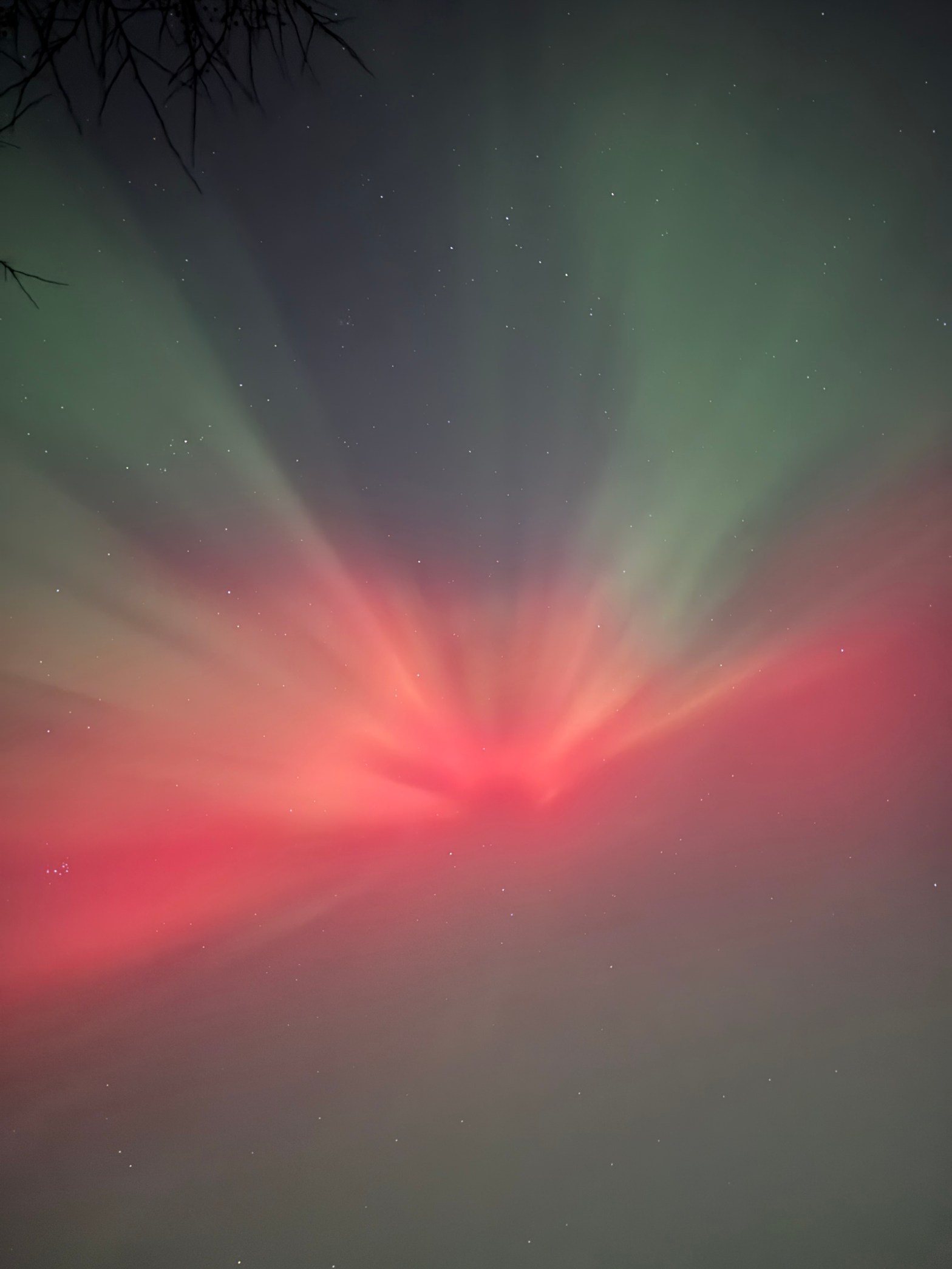
I’ve been thinking about light a lot these past few weeks. The light in the sky, as it softens into wintery strands. The light we carry within and how we share it. The light of people who have passed on, how we remember it. Northern lights, which were astonishing earlier this week. Daylight as it moves through the hours, filtered through curtains, dying earlier as we move toward the Winter Solstice. Fireplace light on these now-chilly evenings. Candlelight as we gather with people we love for a cozy meal.
Light fills our lives in so many ways.
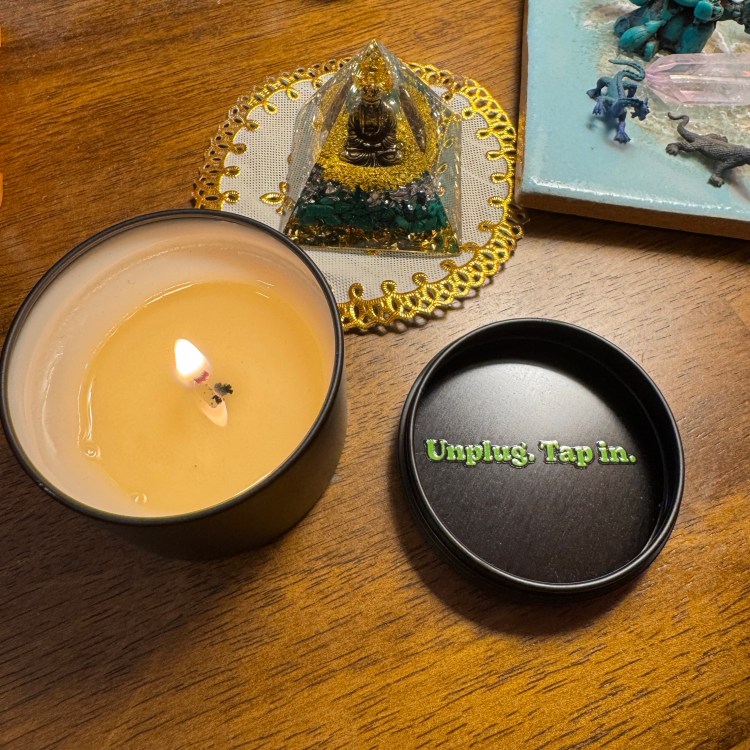
As I write this in my small office across the hall from our bedroom, there is a south-facing window in front of my desk. The outside light is muted by both sheer white curtains and thin clouds. A small lamp on the upper right corner of my desk and a candle glowing near my laptop offer additional illumination.
Illumination is one of those words I love. It takes me beyond the idea of light to the idea of understanding. Of really seeing what’s in front of me. Of shedding light onto what baffles me, frustrates me, scares me, delights me.
There are so many ways to put light into our lives, to illuminate what fortifies and supports us as well as what we need to walk away from or where we need to offer our help. As winter breathes across our rooftops and frosts our gardens, we become more aware of the need to keep warm. We turn on the lights earlier as darkness creeps in before dinnertime. We notice who is standing outside shivering without a warm light of their own.
The invitation to share light and warmth is strong at this time of year. May we all find a way to share our own light, our own warmth, far and wide.
A Poem Offering
With Thanksgiving coming up, I want to share this poem with you that I wrote a few years ago. It appears in the collection Prayer Gardening, which I co-authored with Constance Brewer (available from Kelsay Books).
Before You Set Your Table

The small oranges on the counter are wrinkled.
You cut one into eighths, toss it outside
beneath the bird feeder.
You wait, but no one comes.

It has been below zero all week.
You read about chickadees,
how they run hot, stay warm, masters of survival.
They are why you offered black oil sunflower seeds
in the feeder yesterday when it was ten below.

You believe the chickadees know you.
Sometimes you think the crows do, too.
They ate all the leftover stuffing one morning
when you scattered it around the back yard.

The oranges are for the cardinals.
You heard them earlier, recognized that whistle they have
when it's time to start this year's family.
They'll need whatever sustenance you can offer.

When you look out the window again,
a few orange pieces are gone.
You wonder if the squirrels got there first.
It doesn't matter. You're here
to fill any empty stomach,
hear the hunger beneath every song.
One of the gifts of being older and being outside the standard workforce with kids grown, is that I can often do things whenever it suits me. What time it gets dark isn’t an issue. I forget this fact until I have a conversation with someone who is not looking forward to the longer nights, darker afternoons, this seasonal shift that we cannot stop and the social construct of setting back the clocks so the darkness seems even earlier.
I love the shift into the dark part of the year. Long nights suit me. They are what make it easier to hunker down inside my house, cook long complicated meals, linger at the dinner table, light the fireplace, snuggle up on the couch in front of a good program. I love how long nights settle around me, quiet and less demanding than the bright lights of summer evenings.
On this All Saints Day, I am ready for the quiet. The darkness. The opportunity to create my own magic at home. I am ready for the refuge of winter, of staying where I feel safe in what has become a tragically mean-spirited world. Of course, this is my construct – safe at home.
Darkness can hide many things. I choose to welcome it, light candles in it, let its soft blanket obscure my vision so I can rest.
In this moment, I am made of fallen leaves, geese v-ing across the sky, early snow. My heart beats in time to wind that shakes tree limbs bare. My breath mingles with pine needles, damp earth, woodsmoke, plants headed for slumber. My hair tangles in the North Star, a veil beneath the full moon.
I am made of owls who hunt at night, trailing alto hoots along the way. I am tree frogs on the side of the house, foxes sneaking into the backyard to feast on rabbits. There might be lightning. There might be crickets.
When frost descends, I am made of flannel shirts, hot coffee, old mittens, deer tracks around the bird feeder.
I am of the northern seasons, shifting with the wheel of the year, gear by gear. I curve to meet the cold. I lean into winter's crackle.
The past two weeks have been much slower than anticipated. Within a few days of our return from Iceland, my partner Mick tested positive for COVID. My own positive test happened three days later. The timing was awful – we were scheduled to do extra care for our granddaughter Maeve during that time. The other things we had to postpone – dates with friends, for example – were easier to shuffle into the future. Our first bout of COVID a few years ago caused us to cancel an entire trip to Maine and we lounged around our house for nearly two weeks, feeling pretty terrible the whole time. This time, we each had one day of feeling crappy with a fever, a few days of feeling tired, and not quite a week of testing positive. Such a different experience. We never would have thought this was COVID had we not tested.
Did we pick it up on our recent trip? Probably, but we don’t know. Our traveling companions did not get it. So, it’s a mystery. And a reminder that the season of catching things is upon us. Vaccines are still a good idea. Taking care to not pass a virus on to someone else is always the right thing to do.
Since we’ve returned to the U.S., I’ve recommended traveling to Iceland to everyone who asks how our trip was. Now that we’re unpacked and settled back into the familiarity of home, I’ve thought quite a lot about what made Iceland so appealing: the cleanliness, the quiet, the space to think, the starkness of a volcanic landscape, and the paring down of stuff so I can move around with ease. When I was younger, I always wanted to bring home a piece of wherever I was in the form of some kind of souvenir, but that no longer resonates. Accumulating more stuff is not why I travel. Collecting experiences is my goal now. Seeing how other people live, eating new food, walking unfamiliar streets for the first time, stumbling upon an amazing view, learning about the many ways to organize a country and a culture – that is why I travel.
Our Iceland trip was different from other trips over the past several years in that we slept in a different place every single night. Going around the Ring Road in the time we had required us to do it that way. This kind of travel reminds me of what my parents did on road trips when I was a kid – we were never in the same place for more than one night unless we were visiting someone, like my sister who lived in Colorado. I believe my dad would have loved driving the Ring Road and side routes; that was just his kind of thing. But being in a new place every day means there’s no time until you get home to really sink into what you’ve seen.
I tend to like staying put in a place for several days. Shaking up that tendency a bit – pushing myself to keep moving, keep looking, keep feeling awe over each discovery – made my time in Iceland shimmer.
And I am glad to be back home for now. Glad to consider not only what I absorbed from a place so different from Minnesota, but also what pieces of that place I can incorporate into how I live here.
Upon returning from Iceland last Sunday, one of the first things that struck me was the sound of crickets. Crickets are ubiquitous in Minnesota in late September. They chirped all night through our open bedroom windows. And I realized that I didn’t hear a single cricket in Iceland. What I did hear in Iceland was a quiet that doesn’t exist in Minnesota.
We – my partner Mick, our friends Ned and Susan, and myself – arrived in Iceland from Minnesota the morning of September 18. The very first thing I noticed was the wind – bracing, cold, nonstop. I noticed that wind every single day of our trip, learned that pulling a knitted hat over my head was the best way to keep my hair from permanently tangling. I was grateful that I brought lots of moisturizer to slather on my face as a shield against that wind. And I learned that the wind could hit the side of our rental car hard enough to force me to slow down way below the speed limit to maintain control, which mattered a great deal on narrow roads through mountains and along the coastline. Horse manes and sheep fleece flew in the gales, and the very few trees around Iceland were tilted in the general direction of the prevailing winds.
The second thing I noticed was that no one spoke in a loud voice. Everywhere we went, people spoke quietly. There was so much quiet everywhere that loud voices were jolting. Sure, the wind could howl and the waves from the sea could crash, but loud voices were unnecessary. There was something very soothing about all those soft-spoken people.
The third thing I noticed was the lack of trees. There are very few trees in Iceland. For someone from Minnesota, that makes for quite an alien landscape. Somehow, I didn’t miss trees until very near the end of our 10-day drive along the Ring Road (Hringvegur in Icelandic) because I was so taken with the beauty of the volcanic landscape.
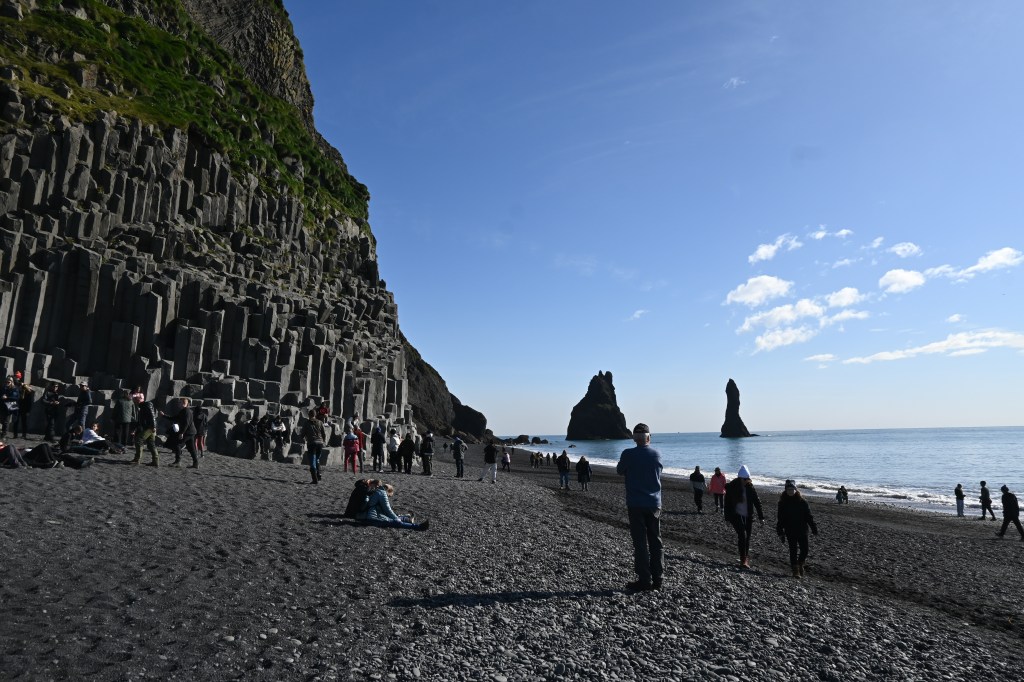
And it was indeed beautiful. Everywhere was light, sky, waterfalls, black beaches, sheep, horses, open spaces without developments and billboards and other human scars. Lava flows and glaciers and crater lakes and craggy cliffs. Unpaved roads and scrubby vegetation and millions of stars in the night sky.
I haven’t yet had a chance to go through all my photos and figure out what it is about Iceland that will stay with me going forward. But I can share a few highlights that delighted me as we explored this nation that is the second-largest island in Europe (after Great Britain) and is about the size of Kentucky.
Iceland was on my list of places I wanted to visit for years. Specifically, I wanted to drive the Ring Road and see that volcanic landscape, experience the light that I imagined was unique to Iceland. I wanted to see northern lights. That I got to do all those things is a little miracle.
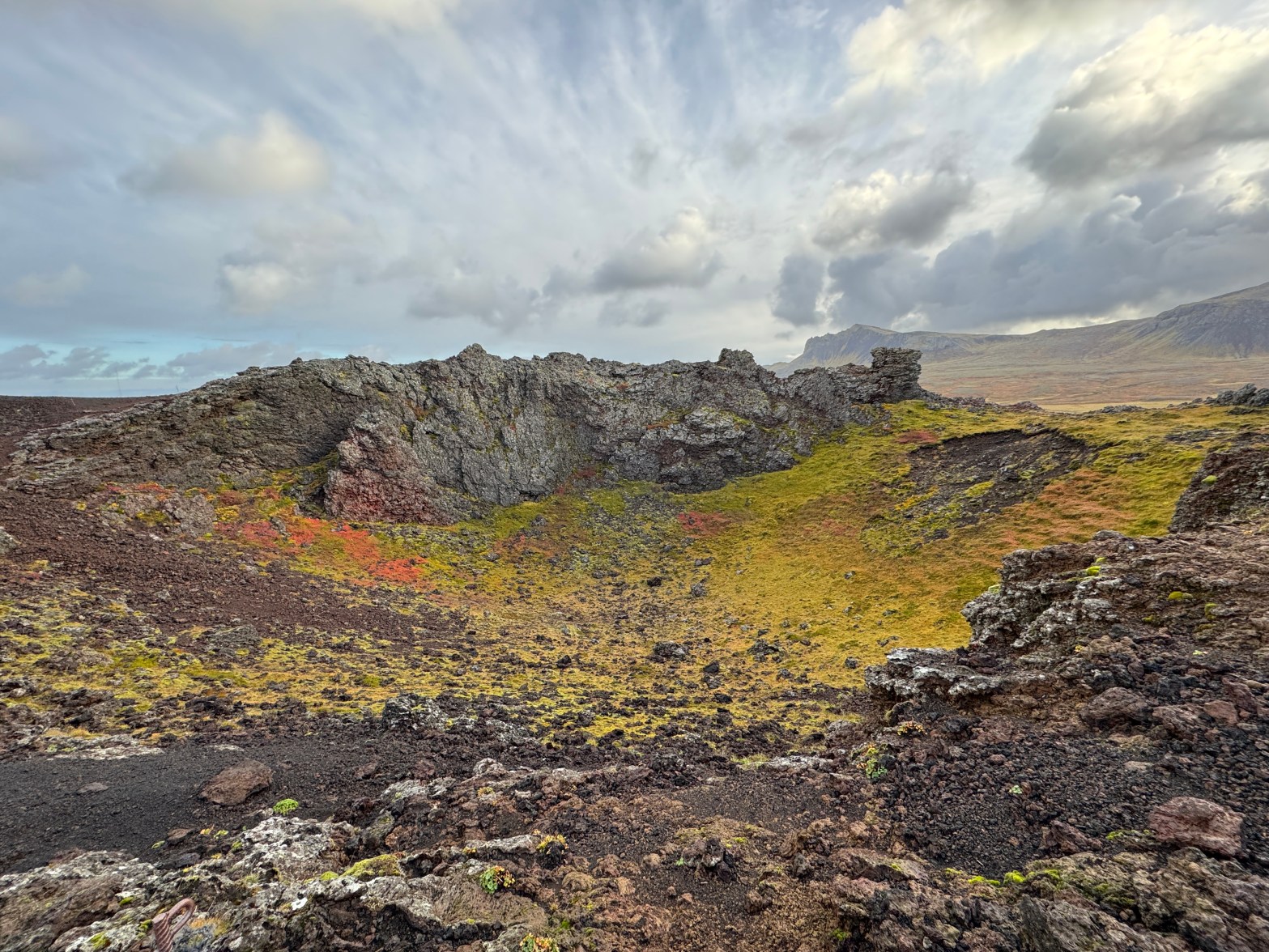
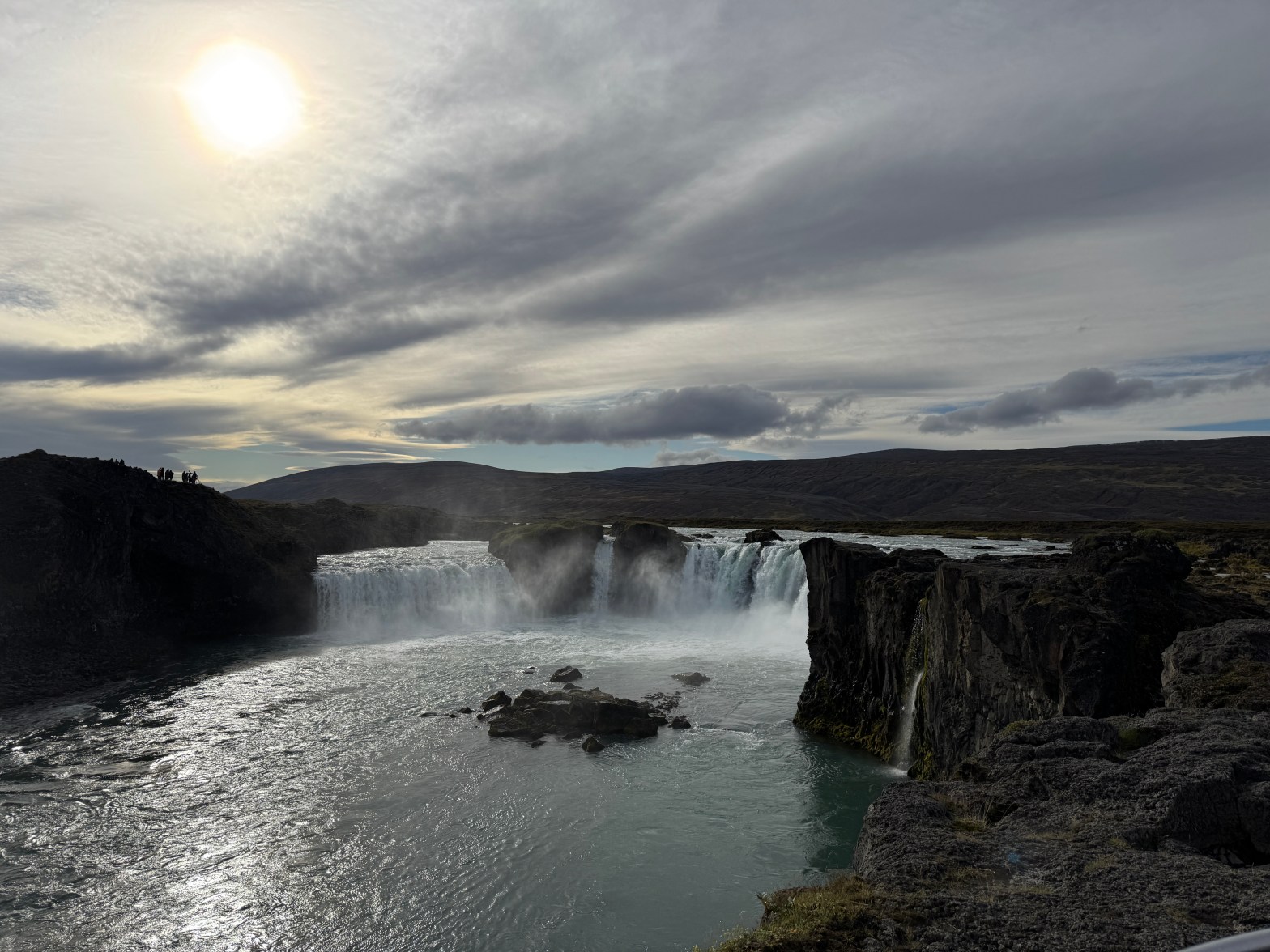
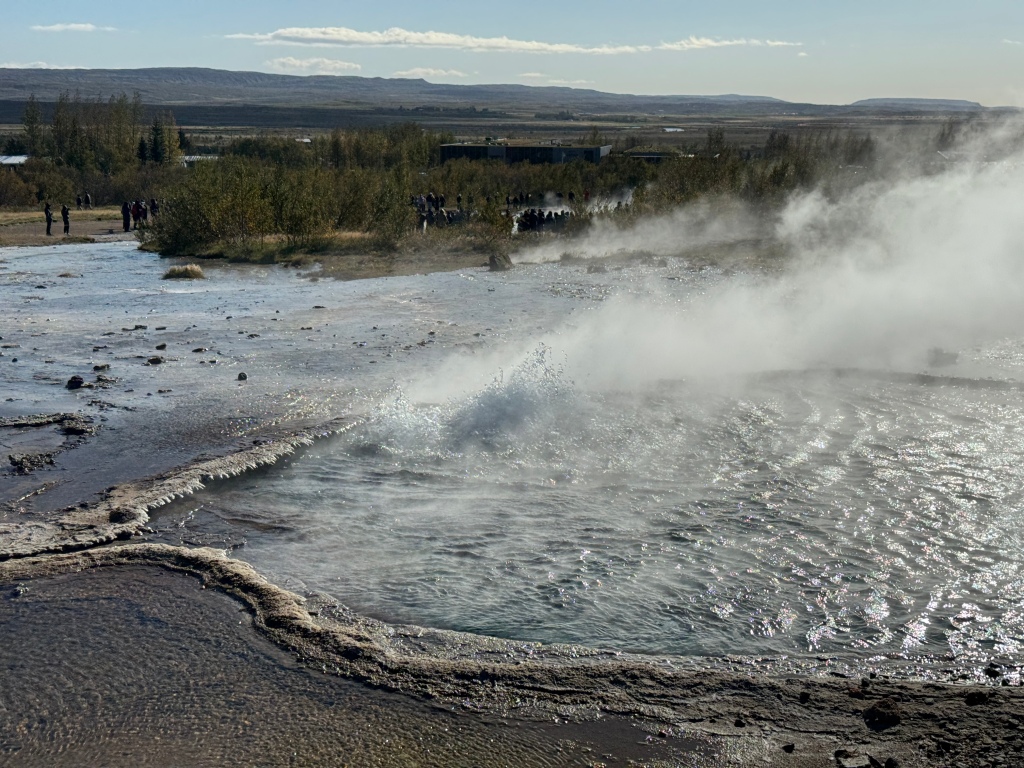
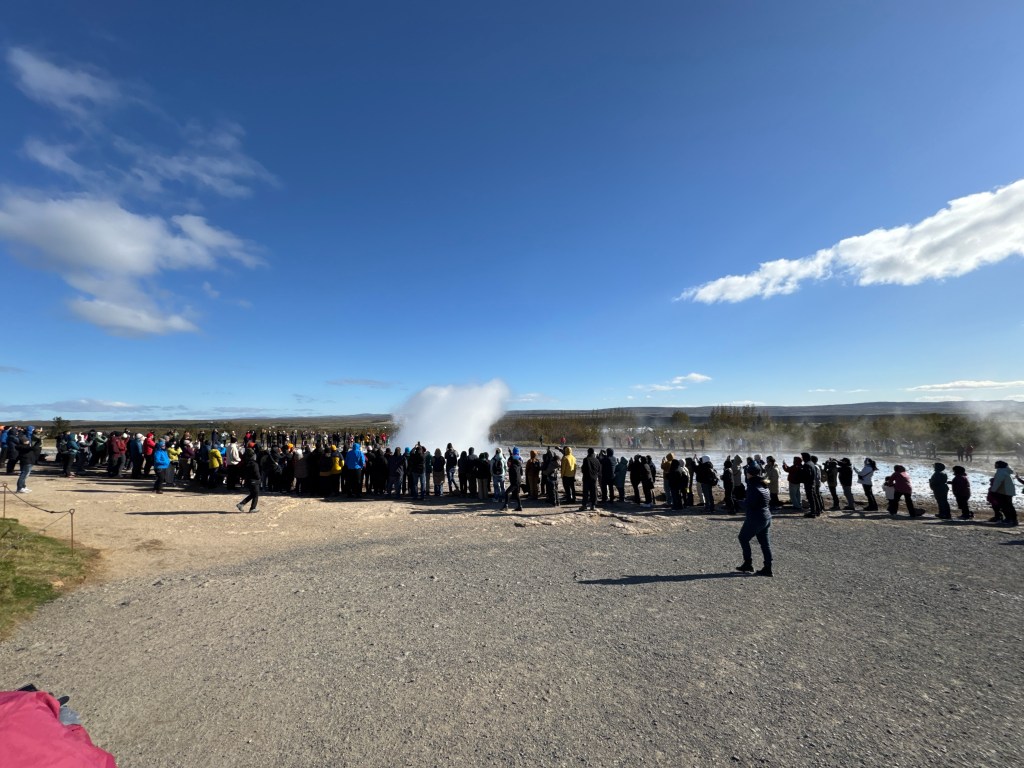
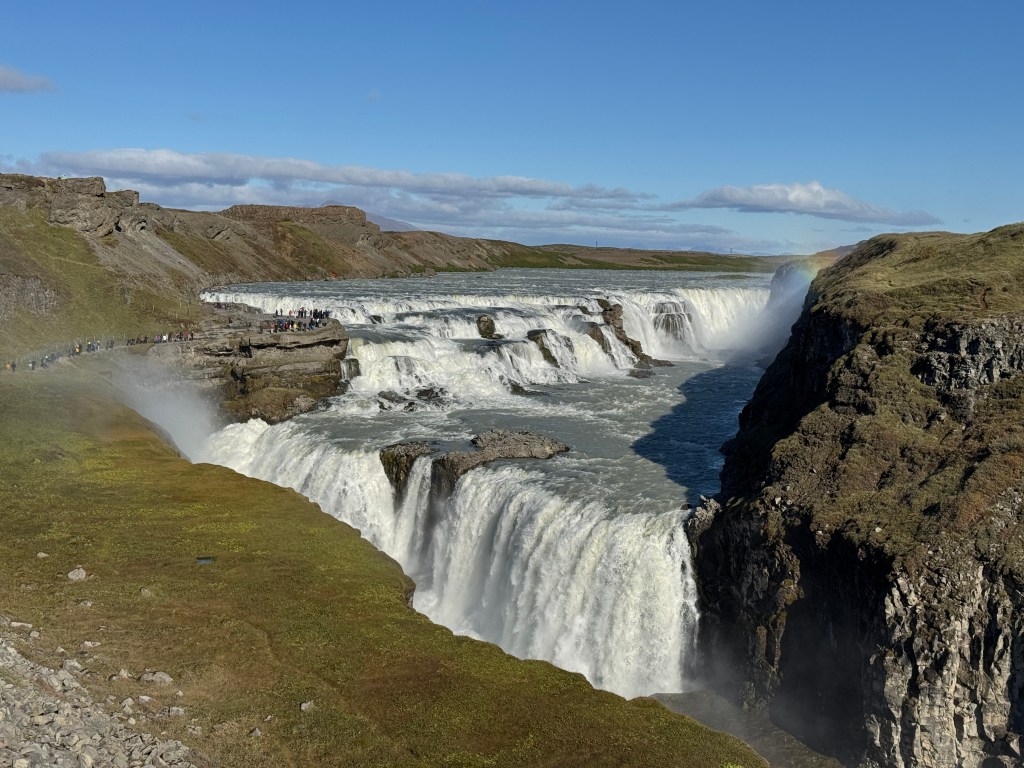
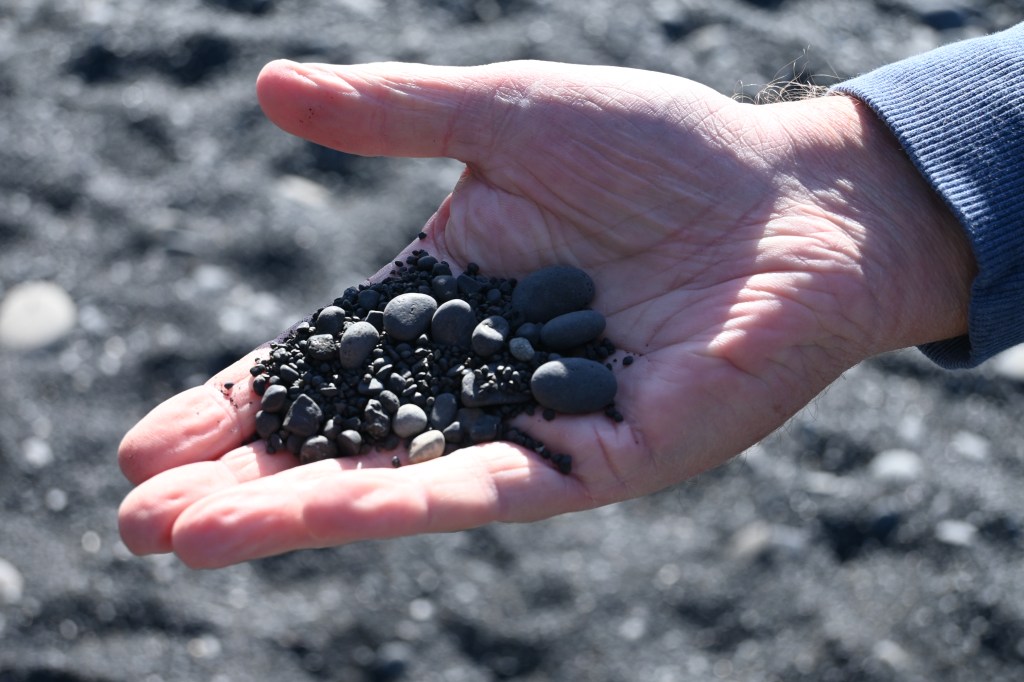
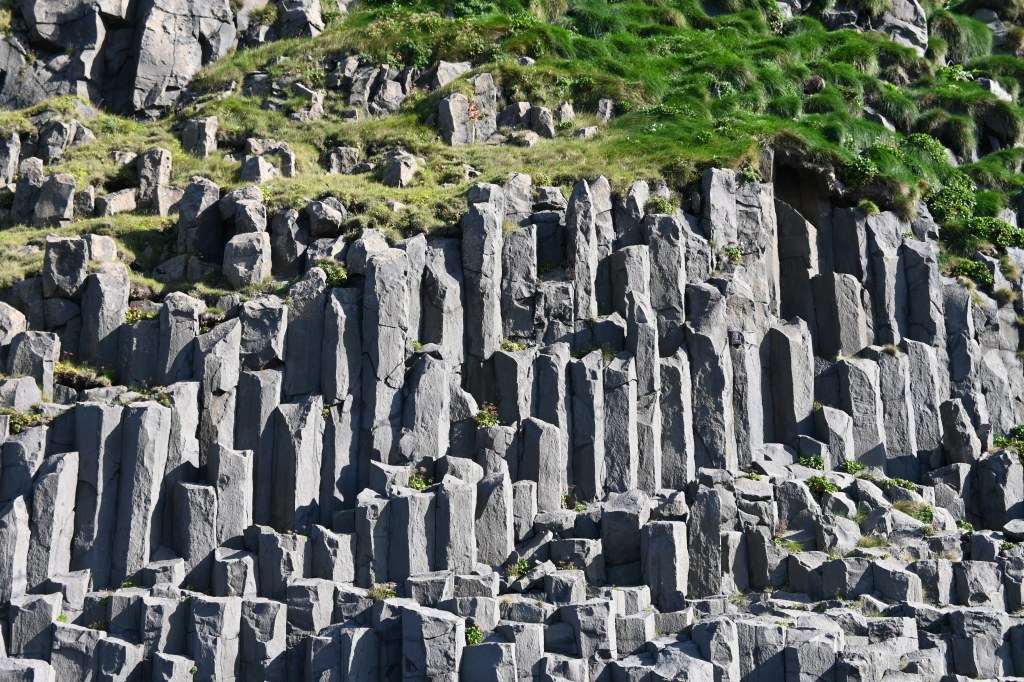
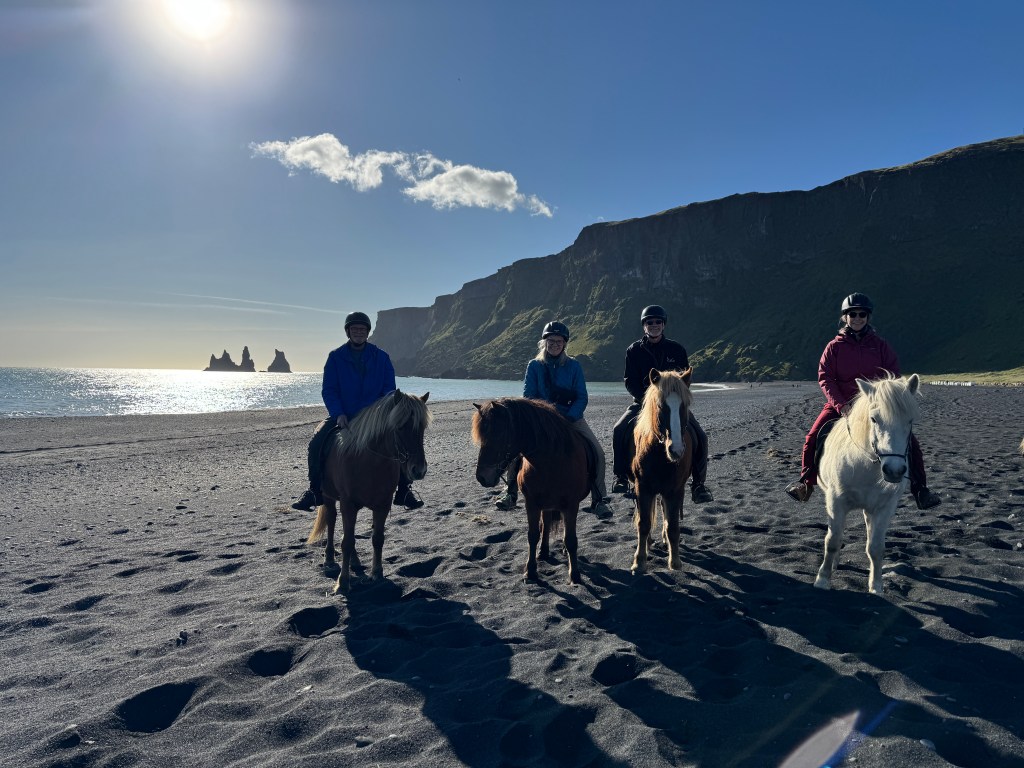
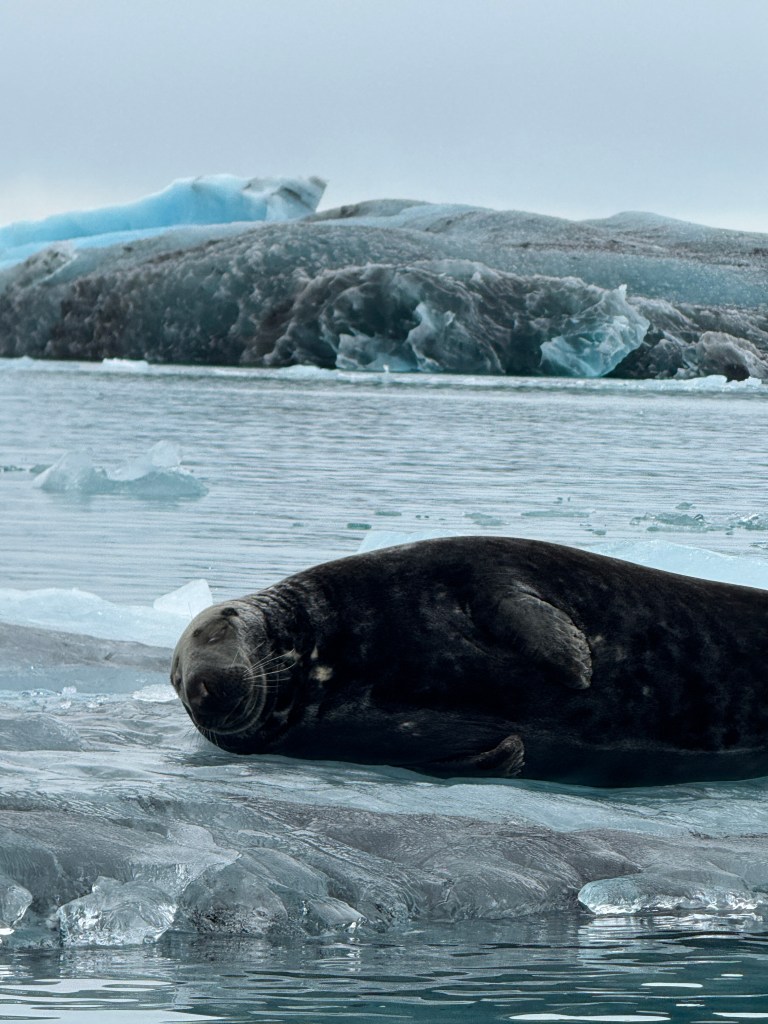
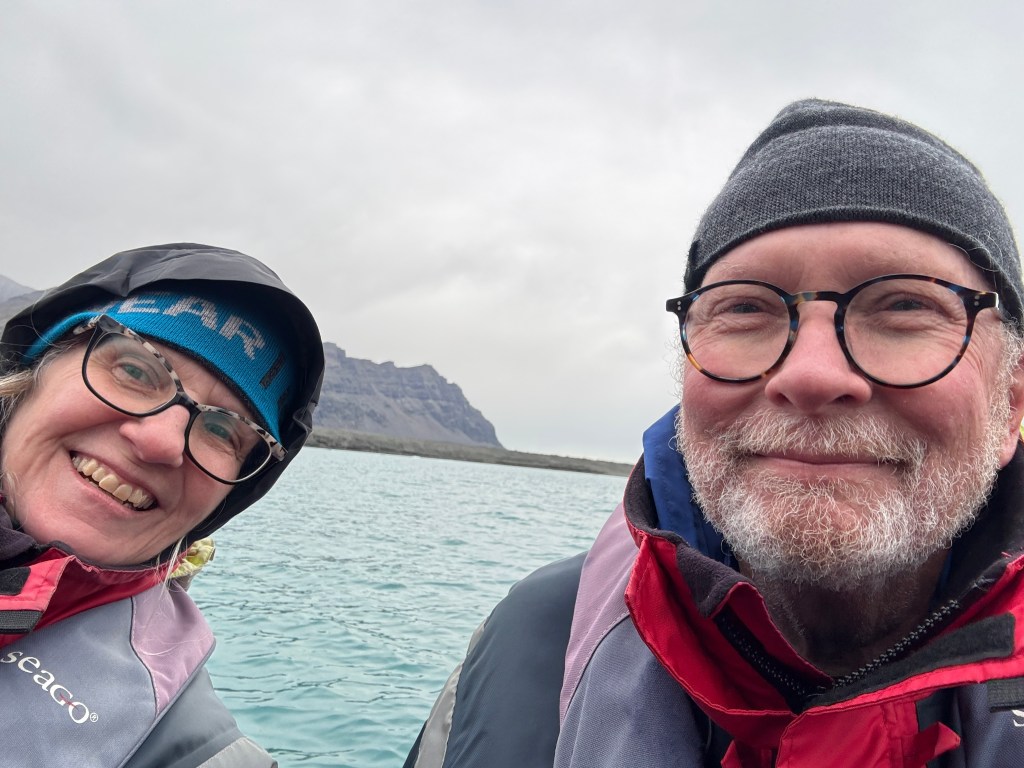
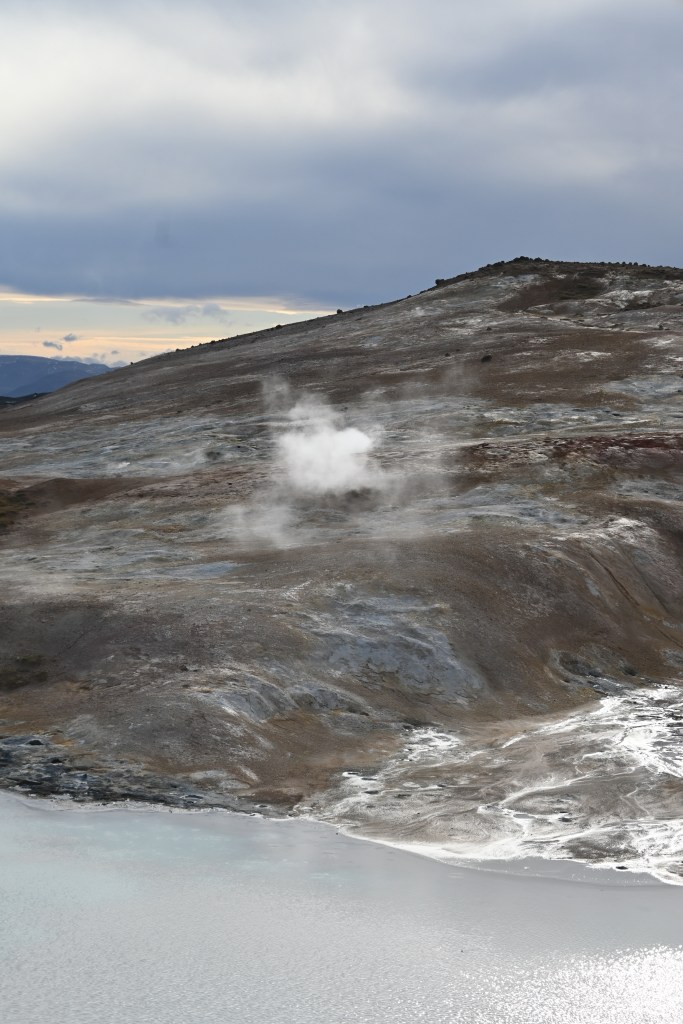
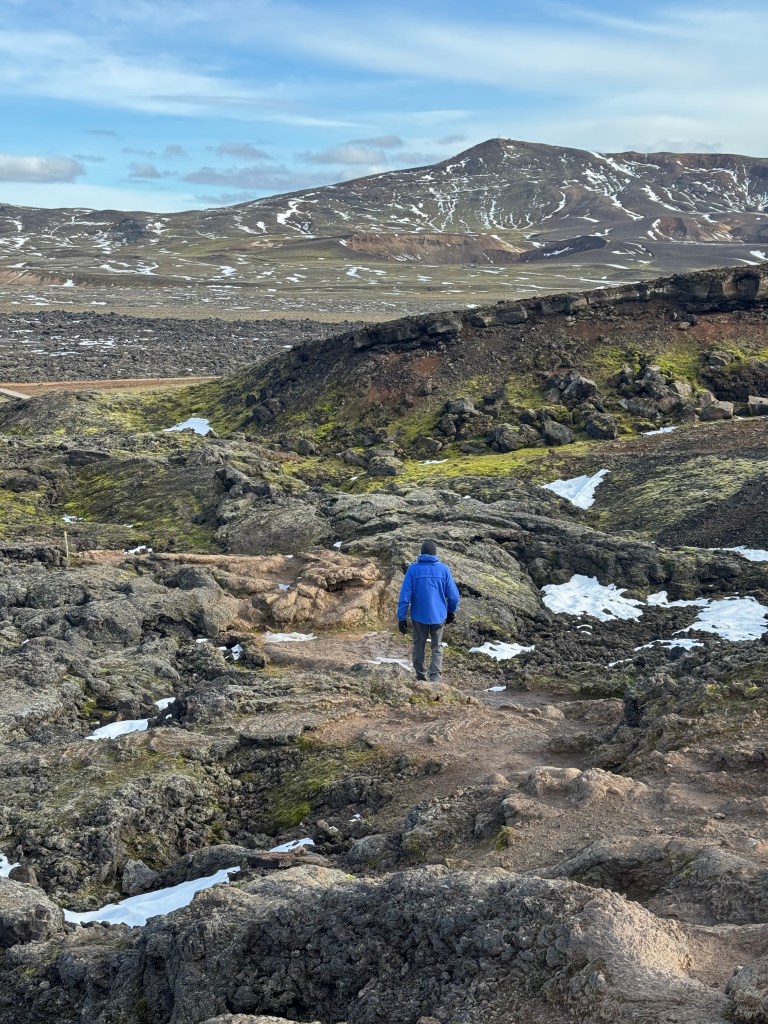
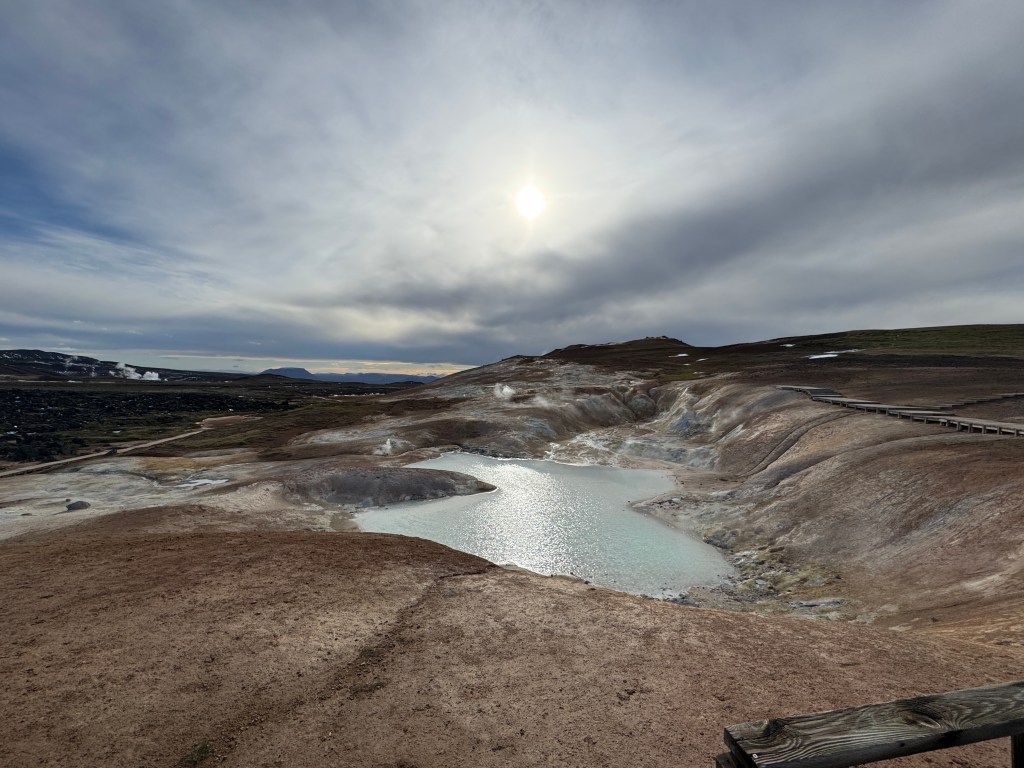
Images from the Golden Circle, which is near Reykjavik and includes Geysir (the geysers spouting very hot sulfurous water), Gullfoss (the giant waterfall), and Kerid (a volcanic crater lake).Images from Reynisfjara – Black Beach.Horseback riding in Vik. Icelandic horses date back over a thousand years and are the only kind of horse allowed in Iceland. They were brought by the original Norse settlers in the 9th and 10th centuries. Photo courtesy of our riding guide.Aboard a Zodiac boat ride in Glacier Lagoon in Hofn, right on the edge of Vatnajökull National Park. We were given red suits to wear that made us look like sunburnt Michelin men, but they kept us warm and dry. That so many seals were hanging around on icebergs amazed us.Northern lights in Seydisfjordur.Hiking around Leirhnjúkur, a rhyolite formation that has turned to clay thanks to the geothermal activity in the area.
There is, of course, much more to Iceland than what I’ve shown here. Once I sort through the 1800 or so photos I took and think a little more about what we experienced, I’ll write more. But, for now, this little taste of Iceland might be just the invitation for someone out there to pack their own bags.
One Minnesota Crone is packing her bags, getting ready to road trip around Iceland the last half of this month.
And I do love a road trip. I grew up going on them, my dad always the driver and my mom always riding shotgun with an atlas on her lap. We never knew where we were going until we got there, but we managed to fill two-three weeks with roadside attractions, motels in tiny towns, AM radio stations that offered local stories wherever we were. We got lost somewhere in Kentucky, played softball with a bunch of kids who lived across from a motel in West Virginia, drove through the middle of Manhattan during a garbage strike, took a local shortcut to get back to Boulder that had such a rough road with a sheer drop on one side that my mom almost cried. I learned that in some parts of the country, all sodas are referred to as “Coke”, which confused me when I was asked what kind of Coke I wanted. I learned to always look at a motel room before agreeing to stay in it, and my parents walked away from more than one room. I learned that being in really close quarters for a couple of weeks requires some flexibility when tempers flare.
Road trips are really different now, not just because I’m often the driver and my parents are no longer here. They’re different because there’s not the same sense of surprise thanks to the internet and travel apps. We (my partner Mick and two friends) already know where we’re staying all the way along the Ring Road. But our activities will unfold when we get there, depending on the day, the weather, what’s available. We’ve left room for surprises. We’ve left room to learn a thing or two.
Surprises are the best part of travel. See you later.
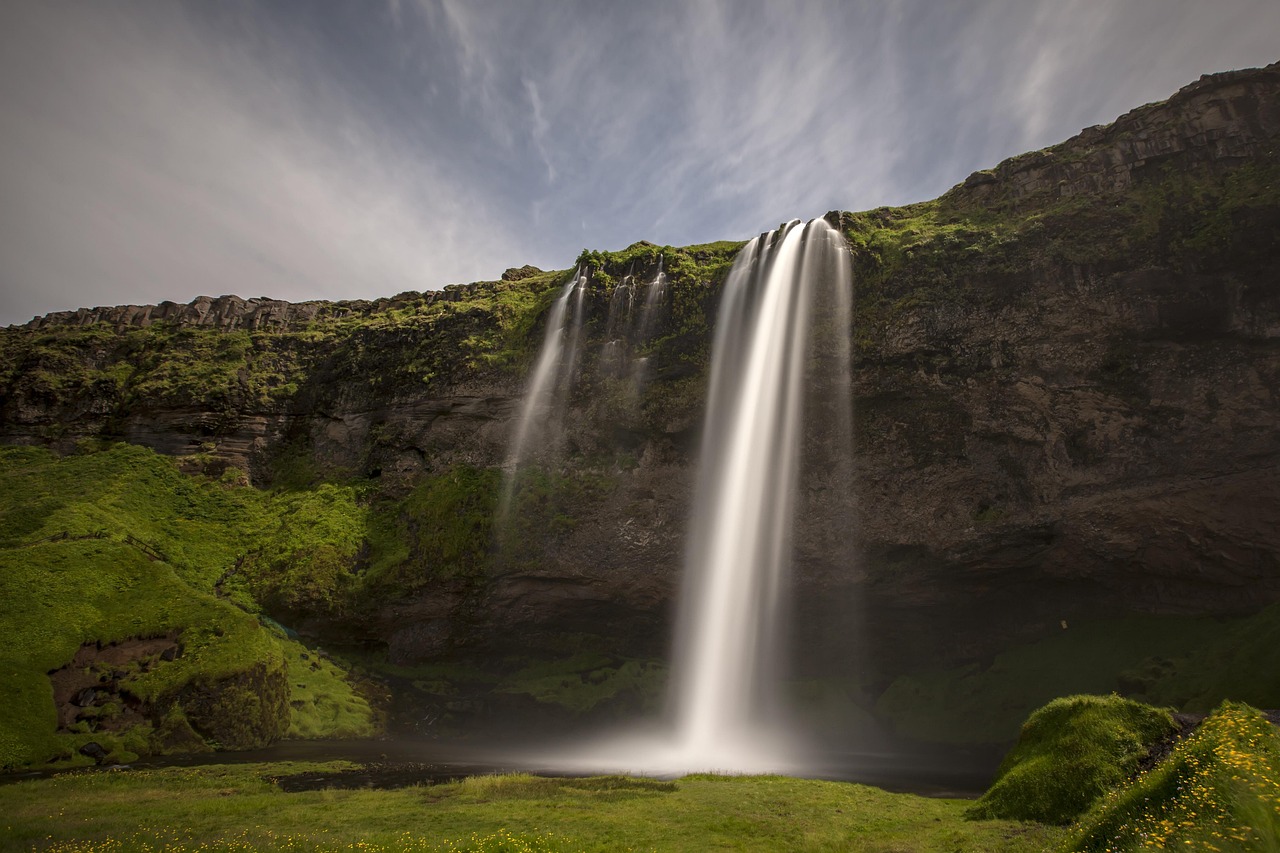
Photo of Seljalandsfoss Waterfall, Iceland, courtesy of adriankirby at Pixabay.com.
I had a whole other piece written for today’s post – mostly – with photos to share.
But my hometown of Minneapolis has been grief-stricken for the past week. It doesn’t feel like it’s appropriate to focus on state fair food or beautiful flowers or the cool tree frog who came to visit our deck. It doesn’t seem quite right to share memories of happy walks with a growing puppy Finn or a birthday dinner out with my best friend. These are all wonderful things and they keep me sane, but I’m at a loss as to how to balance happy moments with the recent tragedy of children shot to death at the first children’s Mass of their school year, other children injured, families’ peace shattered.
And we cannot claim that this tragedy is ours alone. This kind of event is a daily reality for children in Gaza, Ukraine, Haiti, and other war-torn places. It’s also a reality for kids who live with the crossfire from gangs fighting each other, domestic terrorists trying to make a point, or from adults whose mental health struggles result in the purchase of weapons that they then fire upon others in their own community. This kind of event happens all the time at this point in history and, every single time, people are shattered.
Yet here we are again. We seem unable to let go of our ideas about what it means to bear arms or what it means to balance personal freedom with the good of society. We are unable to move to a different idea about the safety of our children and ourselves that puts a pin in the acquisition of modern weapons by ordinary citizens. Here in the U.S., we still adhere to ideas about bearing arms that were written down in the 1700s, when the arms people had access to were completely different.
And it’s killing our children. It’s killing us.
Do not offer thoughts and prayers. Make the changes that matter. Demand and then vote on laws that control access to weapons that no one outside of the military needs to have their hands on. Demand and then vote on health coverage that includes mental health care and counseling. Demand and then vote on school curriculums that include empathy training. Demand and then vote for representatives who put people first rather than some bottom line, some business deal, or loyalty to a party. Get out in your community and take care of each other.
We need to act. There is no more time. Winter is coming.
Wildfire smoke much less than it was. Cool enough to open the windows. White butterflies flit in and out of the catmint. Giant bumblebees make wild bergamot flowers sway beneath their eagerness. A black butterfly with blue, white, and orange markings hovers over blue vervain, spreads its wings open like an iridescent picture book. My dog finds dirt scattered on the deck beneath two freshly planted containers; the squirrels flung dirt all around. I bring out cinnamon, red pepper flakes, scatter both on the new plants after patting the dirt back in place.
Quiet fills the neighborhood. Even houses that hold families with kids are quiet, the kids gone for the day, for the summer. The next-door-neighbor’s daughter-in-law arrives to mow the lawn, and it’s quiet no more. Back and forth across the grass she mows, almost never in a straight line, but somehow she gets it done.
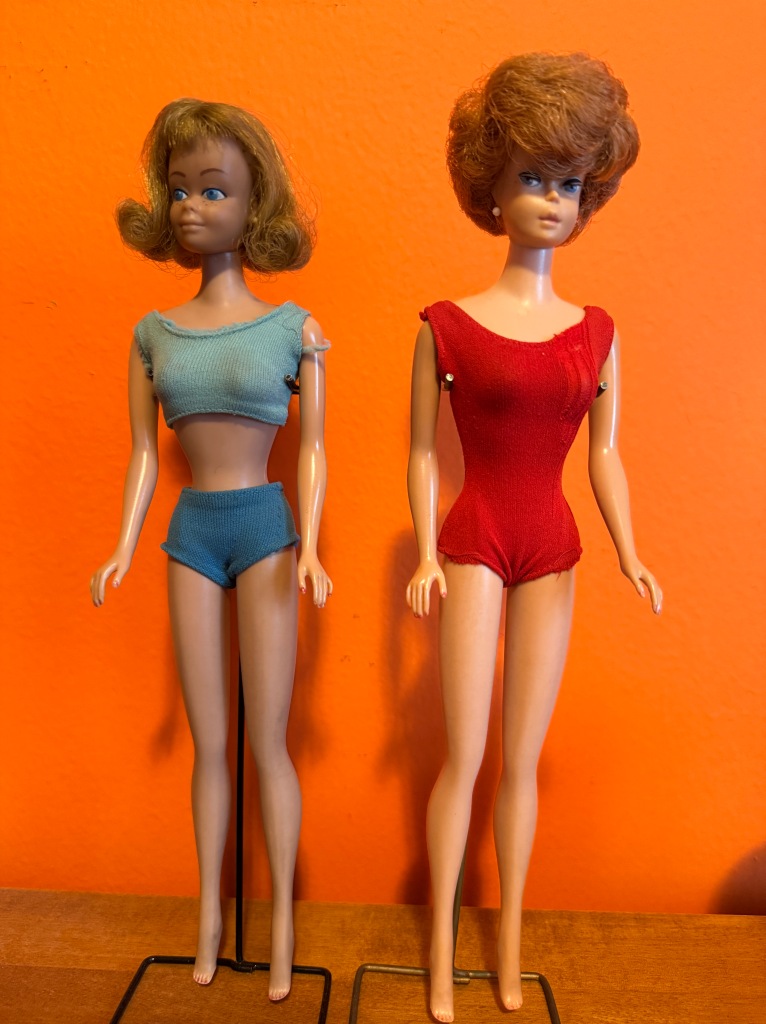
When a small airplane rumbles overhead, I think of my childhood afternoons, how there was the sound of planes in a summer sky then, too. How the backyard was a place to play with my Barbie dolls, pick clovers, look for salamanders and daddy-long-legs in the window wells. I still have those Barbie dolls, dressed in their old swimsuits on stands in my office. Right now, I’m not sure why I’ve kept them. Maybe it’s that connection to when I made up stories every day and they felt real. When things felt safe because I didn’t know any better.
Tuesday afternoon
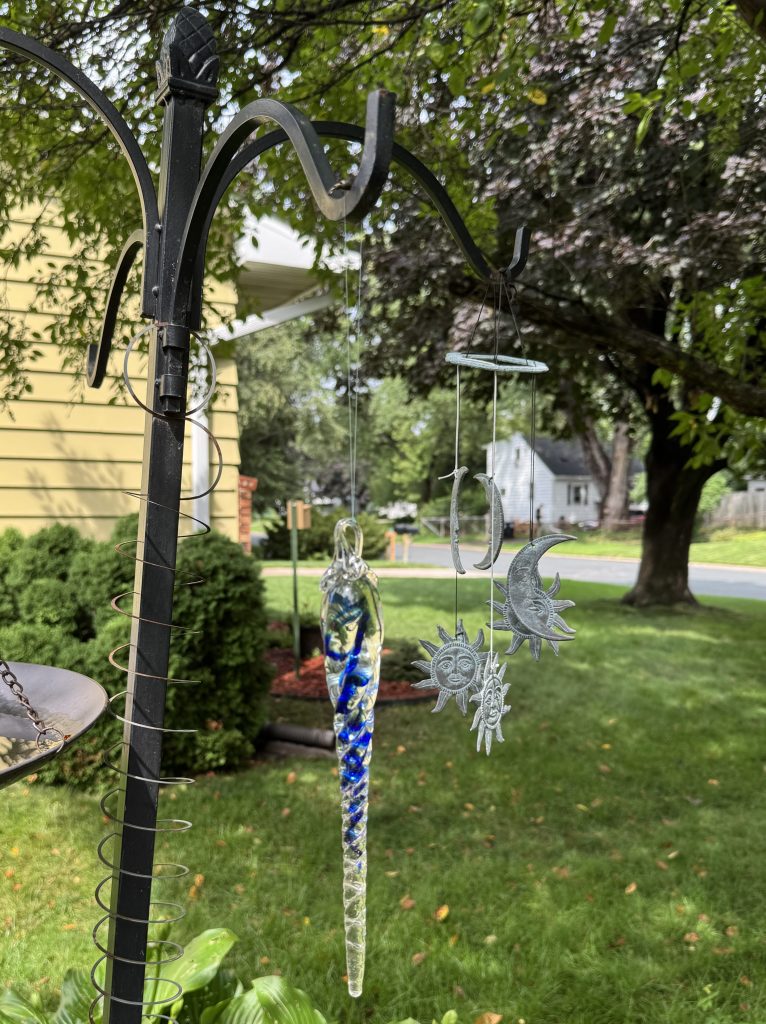
For the first time in ages, I took a 20-minute nap. Three nights in a row of being awakened by a dog with tummy troubles. Muggy afternoon, soft summer clouds – perfect for resting. Soft summer wind. Birds chirping and twerping here and there. Sweep away the cobwebs on the front porch. Apologize to the dislodged spiders. Find the glass icicle my now-passed friend Zola gave me on a shelf in the garage. Hang it on the quadruple shepherd’s hook under the crabapple. Blue swirled through the clear glass. It cannot melt. Oh how it catches the afternoon light.
Two neighborhood women walk dogs on the street post our house. Clouds billow. Shadows fall. Humidity builds. A storm brews while I heat water for tea.
Humid Wednesday midday
Invited to a St. Paul Saints baseball game. Excellent seats. Gray skies but no rain. Private planes overhead aiming for the St. Paul airport. Speculation that some of those planes hold musicians arriving early for the Farm Aid concert that’s this weekend. The Saints’ ball pig emerges on a leash wearing an orange tutu in one inning, a little saddle with Kermit the Frog seated in it in another inning. We leave at the end of the seventh inning as the Saints are behind the Iowa Cubs 7-1. Fun anyway – beer, brats, our friend Mark. Lots of little kids in matching t-shirts sitting in groups all over the stadium. I could spend a lot of summer afternoons like this.
Saturday morning
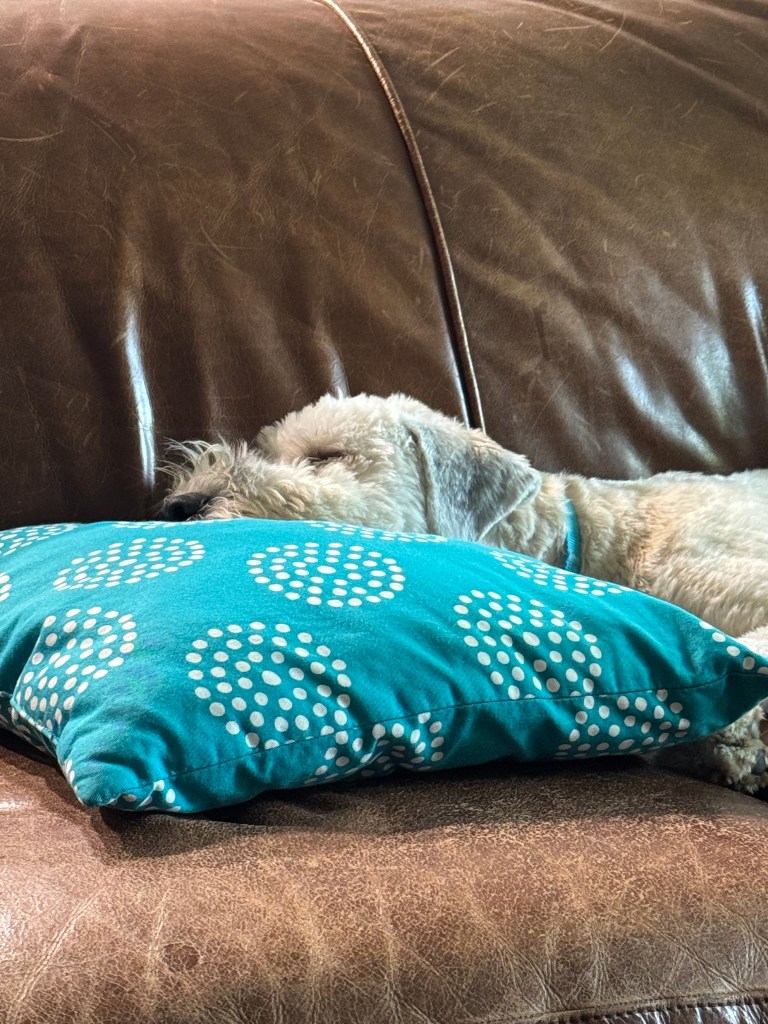
Massively humid. Dark clouds, thick air, water puddled on the deck. Trees so still you think you’re in a photograph. Joe Pye weed and wild bergamot bent over from heavy rain. Low rumbles in the western sky. Bluegrass on the local jazz station. Lucky we took a mile-long walk with the dog before breakfast. Now he stands beside me, waits for me to pet his soft cream-colored hair. No one moves outside. When I look through the patio door, its screen holds a million drops of water.
Sunday morning
So humid it looks foggy outside when I get up with the dog. Soaked grass. Dog’s paws covered in dew. Little stray hairs curl up on my head. By mid-morning, the fogginess diminishes but the air still feels like we’re breathing underwater. I’m enchanted by water droplets sprinkled across leaves, slumbering bumblebees snuggled into flower heads. The older I get, the more joy I feel over small moments: seeing my partner Mick dig in the garden or granddaughter Maeve jump on a backyard trampoline or dog Finn leap after a ball. And the bigger my grief gets over so many people who cannot find that joy, cannot stop themselves from wrecking the world.
Another Monday
Cool enough to shut off air conditioning for the first time in two weeks. I could not live where it’s hot and humid all the time. Or could I? Would I just move at a slower pace, get used to feeling moist everywhere all the time? Learn to live in linen clothes that swish when I walk, drink iced tea instead of hot coffee, eat more salad? Lay down in the afternoon when the temperature is highest, read book after book after book? Okay, maybe.
Another Tuesday
A near-perfect August morning. Soft breeze. Birds conversing. Purple petunias in a pot on our deck. Sun streaming through the open front door. Dog curled nearby on the floor. A friend’s poetry manuscript to read. Fresh coffee in my mug. This is how to set aside the day’s news for a few hours.
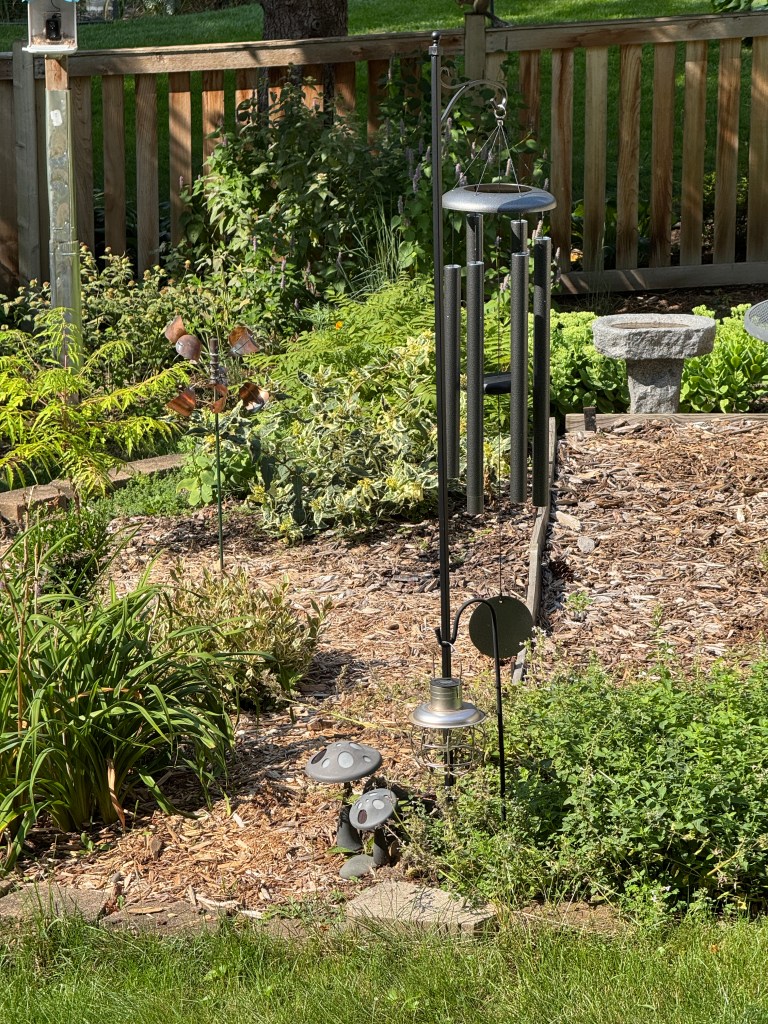
Smell of those petunias strong as I work at the table on the deck. Our copper whirligig garden art twirls in the wind, flings fragments of light across the garden. Wind chimes sing in soothing temple-like tones. I get up to stretch, walk the garden, pull lambsquarters and nightshade from the dirt, toss them into the compost. Bumblebees continue to be everywhere among the flowers, buzz in all parts of our yard.
Finish doing my copy editing. Finish a blurb for my friend. Realize I seldom feel accomplished anymore as I relax into a less-structured life. Remind myself that achieving a peaceful life is an accomplishment and a privilege.











 One Minnesota Crone